For a few months in the late 90s I maintained a website called The Earliad. The following article, a Star Trek episode guide for a season that never was, was one of the mainstays of the site.
What if the original Star Trek had lasted for seven seasons, like its sequels? What if, in an alternate universe, fan attempts to resurrect Star Trek a second time succeeded? In the alternate reality I suggest, third season producer Fred Freiberger moved on to other projects, so Executive Producer Herb Solow persuaded Mission: Impossible producer Bruce Geller to join the Trek staff. In this reality, Geller became co-executive producer of the show, and Gene Roddenberry, absent during Trek’s third season, returned. NBC decided to give Star Trek the coveted Monday at 7:30 PM time slot, buoyed by growing fan interest and the addition of Geller to the production staff. It was a move that changed television history…at least, on a parallel Earth.
The actors and writers I have assigned to these episodes are real people, some who really worked on Star Trek, others who I speculate may have wound up on the series had it lasted. Casting was especially fun, and I made extensive use of the Internet Movie Database to make sure that each actor I chose was the correct age for the part.
Naturally, I have no way of knowing whether or not the real people I mention in this article would have cared to work on Star Trek; many of them might have had little interest. Essentially, this is one fan saying “wouldn’t it have been cool if...?”
STAR TREK
SEASON FOUR
1969-70
To kick off the fourth season, new producer Bruce Geller surmised that a crossover with the more popular Mission: Impossible series would give Star Trek a much-needed shot in the arm after the lacklustre third season. Since Geller produced both shows, a crossover was relatively simple to arrange – though not so simple to execute. The production of this two-part episode was nearly half a million dollars over budget, but the results were worth it – for the first time, Star Trek managed to break into the Nielsen top 20.
The fourth season is distinguished by an abundance of stunt casting and tighter continuity, with several episodes that are outright sequels to earlier stories. Secondary characters Scott, Sulu, Chekov and Uhura received much more screen time and character development, much to the delight of actors James Doohan, George Takei, Walter Koenig, and Nichelle Nichols.
"MISSION: IMPLACABLE, PART ONE"
The ISS Implacable, a starship from the Terran Empire of the Mirror Universe (seen in the second season’s “Mirror, Mirror”), appears in our universe. Having been alerted to the existence of the benevolent Federation, the Empire is eager to gather information on a potentially dangerous rival. Such is their paranoia that they have worked ceaselessly to perfect a “space folding” technology that allows Imperial ships to travel between the two universes at will.
The Implacable’s commanding officer, Captain Alexander Regis, and his first officer, Commander Artemus Strange, disguised as Starfleet officers, infiltrate Federation Starbase 11 and gather historical and strategic data. They return to the Implacable armed with all the knowledge they need to ensure that the Federation will never again cross into the Mirror Universe to threaten the Terran Empire.
But shortly after the Implacable speeds off, destination unknown, a small shuttlecraft appears in its place – with one life form on board. Drifting, damaged, the shuttle sends out a distress call and is picked up by the USS Enterprise. Captain Kirk and Mr. Spock crack open the shuttle to discover the goateed visage of the Mirror Spock, here to warn our heroes of the Implacable threat. Following Captain Regis’ steps and examining the data they stole, the Enterprise crew surmises that Captain Regis plans to use the Guardian of Forever (from “City on the Edge of Forever”) to travel back in time to 1969, where they will sabotage the Apollo program, ensuring that humans in our universe never reach the stars.
“We must reach the Guardian before Captain Regis,” Spock urges, “or he will change history and, possibly, erase us from existence.”
The Enterprise makes flank speed for the Time Planet, resting place of the Guardian of Forever, but they find the Implacable already in orbit. After a fierce space battle that leaves both ships crippled, Regis beams down with a landing party. Captain Kirk, both Spocks, and Lieutenants Uhura and Sulu are hot on their heels, but Regis and his team leap into the Guardian of Forever. Our heroes, insulated from temporal changes by the peculiar properties of the Guardian, find themselves trapped on the Time Planet, for history has been changed, and the Enterprise is gone, erased from existence. Even worse, the Implacable is still in orbit, since it is from another universe and wasn’t affected by the altered history. With little choice, Kirk and the rest jump into the Guardian…
They appear in Washington, DC, circa 1969. While the crew takes stock of their surroundings, Lt. Uhura gasps as she notices a newspaper headline: “Red Chinese Set for Moon Launch this Wednesday!”
“Fascinating,” notes Mr. Spock. But before anything more can be said, policemen leap from a passing patrol car. The futuristic uniforms of the crew – and the alien appearance of the two Spocks – leads to a quick arrest. Our heroes are robbed of their weapons and tossed into a holding cell in a top-secret bunker, their protestations of innocence ignored by their jailers. “You’ll get a chance to explain everything once the boss arrives,” a guard tells them. Sure enough, moments later, a tall, handsome, white-haired man enters the holding area. Kirk gasps, recognizing the man.
“Jim Phelps!” he gasps, as the “To Be Continued” title appears.
Written by:
Bruce Geller and Gene Roddenberry
Guest Starring:
Bill Cosby as Captain Alexander Regis
Robert Culp as Commander Artemus Strange
Peter Graves as Jim Phelps
"MISSION: IMPLACABLE, PART TWO"
As part two opens, Mr. Phelps demands to know who Kirk and his people are. Kirk, recognizing Phelps from Federation historical tapes, knows that Phelps led the IMF – the Impossible Missions Force – through the latter decades of the 20th century. Knowing that history has already been changed, Kirk decides to tell Phelps the truth about their presence. Phelps, in turn, explains the history of the last few years. The American lunar program has been crippled by sabotage – most notably Apollo 1 - while the Chinese program is leaps and bounds ahead. Until five years ago, the Chinese space program was non-existent, but that changed with the recent launch of Floating Swan, a reusable space capsule far in advance of American or Soviet models. In days, Chinese cosmonauts will take Floating Swan all the way to the Moon and back.
“Regis must have arrived years ago, and he’s been interfering in history since then,” Kirk surmises, “but why help the Chinese get to the moon?”
“He wishes to reform your universe in the image of ours,” the Mirror Spock guesses, “and by helping a totalitarian state reach the Moon first…”
“Regis makes it that much more likely that an Empire will rise instead of a Federation,” Kirk finishes.
It takes time, but eventually Phelps realizes that history has been tampered with. He reports to his shadowy supervisor, who tells Phelps that “your mission, should you choose to accept it, is to destroy Floating Swan, capture or kill Regis and Strange, and wipe out all traces of Chinese space research. As always, if any of your IM force is caught or killed, the Secretary will disavow any knowledge of your actions.”
In classic Mission: Impossible style, Phelps and his team infiltrate the Chinese rocket site, destroying it and capturing Regis and Strange. (In a memorable scene, Martin Landau impersonates Mirror Spock to fool Regis – a tip of the hat to rumours that Landau was once considered for the role of Spock.) Kirk shares a warm moment with Phelps, telling him that the adventures of he and his Impossible Missions Force are legendary in his time. The Guardian of Forever, sensing that history has been set right, draws the people of the future back to the Time Planet.
Kirk immediately calls the Enterprise – which, sure enough, has returned, “You’ve only been gone a moment, sir,” Scott reports from the bridge. Suddenly, Regis and Strange vanish in a shimmer – the Implacable has beamed them back up. Kirk orders Scotty to destroy the Implacable, but it’s too late – the ship is already folding itself back into its own universe. The landing party returns to the Enterprise.
“What will you do now?” Kirk asks the Mirror Spock.
“I shall return to my own universe,” he replies, “After I repair my shuttlecraft. Beyond that, I cannot say – warning you has certainly betrayed my intentions towards the Empire.”
“Just remember what I told you,” Kirk says, referring to their first meeting, “One man can make a difference. And you have – for billions of Federation citizens.”
Mirror Spock considers this, then turns away, heading off to his uncertain destiny.
Written by:
Bruce Geller and Gene Roddenberry
Guest Starring:
Bill Cosby as Captain Alexander Regis
Robert Culp as Commander Artemus Strange
Peter Graves as Jim Phelps
Martin Landau as Rollin Hand
Barbara Bain as Cinnamon
with Greg Morris and Peter Lupus
"JOANNA"
Dr. McCoy’s daughter Joanna visits the ship, but his happiness turns to fatherly rage as Captain Kirk takes a little too much interest in the beautiful young woman. Meanwhile, a surprise Romulan attack, (led by the same commander disgraced by Kirk and Spock in “The Enterprise Incident”) cripples the ship – and the vengeful Romulans don’t seem too interested in taking prisoners.
Written by:
D.C. Fontana
Guest Starring:
Yvonne Craig as Joanna
Joanne Linville as Romulan Commander
(In our reality, “Joanna,” a story by D.C. Fontana, devolved into the third season episode “The Way to Eden.” In this synopsis, I have combined Fontana’s Kirk-Joanna love story with my own imaginary sequel to “The Enterprise Incident,” another Fontana episode.)
"VIRTUAL VIRTUE"
Kirk, Spock, and McCoy beam down to planet Abrascon, a potential candidate for Federation membership. Abrascon is a well-ordered, stable society, much like 23rd century Earth – there is no war, no crime, no hunger. But McCoy accidentally stumbles across Abrascon’s greatest secret: that any wrongful act, no matter how minor, is punished by painful, gruesome death, as dictated in an ancient religious text. McCoy is put on trial for heresy when he calls the Abrascon’s system of justice barbaric, their good manners only “virtual virtue.” When Spock finds himself defending the doctor, he must bring all of his logical powers to bear to secure McCoy’s freedom.
Written by:
Walter Koenig
Guest Starring:
Donald Sutherland as Father Hain
Roy Thinnes as High Prosecutor
(Walter Koenig, of course, played Russian navigator Mr. Chekov. What many people don’t know is that he’s an excellent writer – his novel Buck Alice and the Actor-Robot is a scream, as is Chekov’s Enterprise, Koenig’s look at the making of Star Trek: The Motion Picture. Koenig also wrote “The Infinite Vulcan,” an episode of the Star Trek animated series.)
"MUDD PIE"
Harry Mudd returns, this time with a dessert that’s taking the sector by storm: Mudd Pie, a seemingly harmless confection that turns out to have highly narcotic effects. When a pie fight breaks out on the recreation deck, Kirk decides that enough is enough and goes after his piece of the pie. To complicate matters, Kirk’s old flame Dr. Helen Noel returns to the Enterprise, and she’s cooking up a scheme of her own: winning Kirk’s heart for good.
Written by:
Stephen Kandel and Gene Roddenberry
Guest Starring:
Roger C. Carmel as Harry Mudd
Marianna Hill as Dr. Helen Noel
"A GLIMPSE OF THE TWILIGHT TIMES"
Lieutenant Uhura and Ensign Chekov are taking the shuttlecraft Copernicus on a routine scientific survey when a capricious alien flings them into the far future. Trapped at the end of time, will Chekov and Uhura be caught in the Big Crunch as the universe collapses – or can Captain Kirk and the Enterprise track down their lost crewmates?
Written by: Harlan Ellison
Guest Starring:
Lorne Greene as Cronarch
(In our reality, Ellison left the Star Trek fold in disgust after the revision of his classic “City On the Edge of Forever” script. In this alternate reality, I surmise that Roddenberry promised not to interfere with Ellison’s story, luring Ellison back for another groundbreaking tale. Would Ellison have returned to write for Trek, under any circumstances? Well, according to Stephen King’s non-fiction account of the history of horror, Danse Macabre, Ellison did indeed submit a story treatment for Star Trek: The Motion Picture. Though the story is just a footnote in King’s book, his brief description of Ellison’s treatment makes is sound a whole lot cooler than the V’Ger story we eventually got in the movie. )
"THE KOR CONTINGENCY"
Klingon Commander Kor returns, but with hands outstretched in peace – and treachery. When a new Klingon peace initiative turns out to be a trap and the USS Islamabad is destroyed, Kirk must hold off an approaching Klingon fleet until reinforcements arrive.
Written by:
David Gerrold
Guest Starring:
John Colicos as Kor
Michael Ansara as Kang
James Hong as Captain Leopold Wen
(On our Earth, the producers of Star Trek wanted John Colicos’ Kor, first seen in “Errand of Mercy,” to become a recurring character, but for a number of reasons these plans never materialized. However, decades later, Colicos did return to play Kor in several episodes of Star Trek: Deep Space Nine.)
"INTERLUDE IN G MINOR"
As tensions between the Federation and the Klingon Empire mount, Lieutenant Uhura struggles with grief over the loss of a lover on the USS Islamabad (see “The Kor Contingency”). When Spock suggests he and Uhura collaborate on a piece of music to honour the fallen, she uses the chance to reflect on the choices that led her to a career in Starfleet.
Written by: Gene Coon
Guest Starring:
Michael Barrier as Lieutenant Vincent DeSalle
William Campbell as Koloth
"THE JOY MACHINE"
Once a popular vacation destination, the planet Timshel has cut itself off from the Federation. Kirk and company discover that a new technology that delivers pure pleasure to all who desire it is to blame for the disappearance– and the effect is so addictive that it threatens the very existence of the Federation. When Kirk tastes the fruit of the Joy Machine, he must choose between perfect bliss and the struggle of his life as a Starfleet officer.
Written by: Theodore Sturgeon
Guest Starring:
Linda Harrison as Danielle Du Molin
Sylvester Stallone as Stallone Wolff
(In our reality, Theodore Sturgeon wrote an outline for a Star Trek episode titled “The Joy Machine,” but the episode was never produced. Decades later, novelist James Gunn used Sturgeon’s outline to write The Joy Machine, #80 in the Star Trek novel series. My episode synopsis is based on Gunn’s book.)
"A HANDFUL OF CONSCIENCE, A HANDFUL OF DEFEAT"
On a spy mission deep into Klingon territory, Lieutenant Sulu and Ensign Chekov find themselves caught up in the plight of a peaceful band of Klingon secessionists. It’s the perfect opportunity to stir up trouble for the Empire – but can Chekov and Sulu bring themselves to use these farmers as tools of the Federation? Meanwhile, Captain Kirk engages in a tense battle of nerves with Commander Kor.
Written by: David Gerrold
Guest Starring:
John Colicos as Kor
Bill Bixby as Kruse
Marianna Hill as Dr. Helen Noel
"STARSHIP ON THE EDGE OF FOREVER"
The Enterprise once again braves the Great Barrier at the edge of the galaxy, this time accompanied by a Betazoid empath who hopes the shield the crew from the Barrier’s disruptive telepathic effects. But when the experiment backfires, the entire crew begins to evolve beyond the boundaries of human potential. Can the crew resist the temptations of Godhood?
Written by: Harlan Ellison
Guest Starring:
Raquel Welch as Taleen Myrandis
"VEGETABLE FARM"
Sulu discovers that his pet plant, Beauregard (seen in “The Man Trap”) is in fact a sentient life form – and so are a number of other botanical specimens Sulu has brought to the ship after a recent planetary survey. But before Sulu can inform the captain, the plants have taken over the botany lab – and they’ve sealed Sulu inside. His only hope of escape is to take advantage of the power struggle that slowly grows among the vegetables.
Written by: Walter Koenig
Guest Starring (voices only):
Milton Berle as Beauregard
Jack Palance as Irrational Carrot
Mary Tyler Moore as Petulant Artichoke
Lucille Ball as Radical Beet
James Doohan as Polluted Potato, Arrogant Radish, and Brutish Brussels Sprouts
(Believe it or not, Milton Berle was actually considered for a guest starring spot on the Star Trek of our world. The episode was never produced.)
"THE END OF THE ENCOUNTER"
The Enterprise and one of her sister ships, the USS Encounter, undertake a dangerous mission: perform a surgical strike against a Klingon dilithium cracking station. The mission is successful, but there is a price. When Kirk allows the captain of the Encounter to sacrifice her ship for the sake of the Enterprise and her crew, he must wrestle with his decision. Winner of the 1970 Emmy award for special visual effects.
Written by: Richard Matheson
Guest Starring:
Peggy Lipton as Captain Twilight Barnes
Michael Ansara as Kang
Marianna Hill as Dr. Helen Noel
Michael Barrier as Lt. Vincent DeSalle
"WE’VE ALL BEEN HERE BEFORE"
At the edge of explored space, the Enterprise discovers a pristine class M planet, ripe for colonization. But if no one has been here before, who can explain the detritus that litters the world – detritus that looks suspiciously like 20th century Americana? And what does a half-finished crossword puzzle have to do with the mystery? This episode features the famous “Burma Shave” scene, where the landing party walks along a two-lane blacktop and reads the following signs:
Your phaser blade
Has had its day
So why not shave
The modern way?
Burma-Shave
Written by: Walter Koenig and David Gerrold
Guest Starring:
Marianna Hill as Dr. Helen Noel
Abe Vigoda as Tourist
"ZERO MINUS ONE"
Klingon agents have planted a doomsday bomb at the core of a neutral planet, and the crew finally discovers why the Organians have failed to stop the escalating conflict between Federation and Empire. In this episode, Spock engages in a thrilling martial arts duel with guest star Bruce Lee while Scotty races to defuse the doomsday bomb.
Written by: Gene Roddenberry and D.C. Fontana
Guest Starring:
Bruce Lee as Kolchak
William Campbell as Koloth
Bruce Hyde as Lt. Kevin Riley
Jon Abbott as Ayelborne
"DEAD IN SPACE"
The Enterprise runs afoul of an ionic storm that overloads every system in the ship. With rescue days away at best, the crew struggles to maintain life support, eventually moving the entire crew onto one deck to conserve energy. “A claustrophobic exploration of the limits of human tolerance,” wrote TV Guide at the time, granting Star Trek the cover story for the first week of January, 1970.
Written by: Gene Coon
Guest Starring:
Bruce Hyde as Lt. Kevin Riley
Marianna Hill as Dr. Helen Noel
Michael Barrier as Lt. Vincent DeSalle
John Winston as Lt. Kyle
"FOUR SEASONS IN THE MIND OF MAN"
Dr. McCoy and Nurse Chapel attend a medical conference on Adigeon Prime while the Enterprise faces off against a task force of Orion raiders. Remarkably, the primary focus of the episode is not on the space battle, but on the interaction of McCoy and Chapel, who reveal to each other for the first time why each entered the field of medicine.
Written by: Robert Bloch
Guest Starring:
Graham Greene as Dr. Geoffrey Two Trees
Leo McKern as Orion captain
"THE X SAMPLE"
While Captain Kirk contends with a capricious admiral on an inspection tour of the Enterprise, Mr. Spock becomes dangerously obsessed with a curious mineral sample that may hold the key to the origin – and ultimate fate – of the universe.
Written by: Richard Matheson
Guest Starring:
Patrick McGoohan as Admiral Breton
Adam West as Commander Zahn
"X, Y, AND Z"
While exploring an isolated star system in the void between two of the galaxy’s spiral arms, the Enterprise runs across the archetypal mad scientist and his equally archetypal beautiful daughter. When the mad doctor kidnaps one of Kirk’s crew, the captain must depend on his wits, a clever but hot-headed officer, and the good intentions of an innocent but brilliant woman.
Written by: Jerome Bixby
Guest Starring:
Keir Dullea as Lt. Xavier Tamosevich
Lee Meriwether as Yolanda Zemyatin
Vincent Price as Professor Yuri Zemyatin
(The title of this episode is, of course, an homage to “A, B, and C,” an episode of one of my favourite TV shows, The Prisoner.)
"PUBLIC ENTERPRISE"
The actors and writers I have assigned to these episodes are real people, some who really worked on Star Trek, others who I speculate may have wound up on the series had it lasted. Casting was especially fun, and I made extensive use of the Internet Movie Database to make sure that each actor I chose was the correct age for the part.
Naturally, I have no way of knowing whether or not the real people I mention in this article would have cared to work on Star Trek; many of them might have had little interest. Essentially, this is one fan saying “wouldn’t it have been cool if...?”
STAR TREK
SEASON FOUR
1969-70
To kick off the fourth season, new producer Bruce Geller surmised that a crossover with the more popular Mission: Impossible series would give Star Trek a much-needed shot in the arm after the lacklustre third season. Since Geller produced both shows, a crossover was relatively simple to arrange – though not so simple to execute. The production of this two-part episode was nearly half a million dollars over budget, but the results were worth it – for the first time, Star Trek managed to break into the Nielsen top 20.
The fourth season is distinguished by an abundance of stunt casting and tighter continuity, with several episodes that are outright sequels to earlier stories. Secondary characters Scott, Sulu, Chekov and Uhura received much more screen time and character development, much to the delight of actors James Doohan, George Takei, Walter Koenig, and Nichelle Nichols.
"MISSION: IMPLACABLE, PART ONE"
The ISS Implacable, a starship from the Terran Empire of the Mirror Universe (seen in the second season’s “Mirror, Mirror”), appears in our universe. Having been alerted to the existence of the benevolent Federation, the Empire is eager to gather information on a potentially dangerous rival. Such is their paranoia that they have worked ceaselessly to perfect a “space folding” technology that allows Imperial ships to travel between the two universes at will.
The Implacable’s commanding officer, Captain Alexander Regis, and his first officer, Commander Artemus Strange, disguised as Starfleet officers, infiltrate Federation Starbase 11 and gather historical and strategic data. They return to the Implacable armed with all the knowledge they need to ensure that the Federation will never again cross into the Mirror Universe to threaten the Terran Empire.
But shortly after the Implacable speeds off, destination unknown, a small shuttlecraft appears in its place – with one life form on board. Drifting, damaged, the shuttle sends out a distress call and is picked up by the USS Enterprise. Captain Kirk and Mr. Spock crack open the shuttle to discover the goateed visage of the Mirror Spock, here to warn our heroes of the Implacable threat. Following Captain Regis’ steps and examining the data they stole, the Enterprise crew surmises that Captain Regis plans to use the Guardian of Forever (from “City on the Edge of Forever”) to travel back in time to 1969, where they will sabotage the Apollo program, ensuring that humans in our universe never reach the stars.
“We must reach the Guardian before Captain Regis,” Spock urges, “or he will change history and, possibly, erase us from existence.”
The Enterprise makes flank speed for the Time Planet, resting place of the Guardian of Forever, but they find the Implacable already in orbit. After a fierce space battle that leaves both ships crippled, Regis beams down with a landing party. Captain Kirk, both Spocks, and Lieutenants Uhura and Sulu are hot on their heels, but Regis and his team leap into the Guardian of Forever. Our heroes, insulated from temporal changes by the peculiar properties of the Guardian, find themselves trapped on the Time Planet, for history has been changed, and the Enterprise is gone, erased from existence. Even worse, the Implacable is still in orbit, since it is from another universe and wasn’t affected by the altered history. With little choice, Kirk and the rest jump into the Guardian…
They appear in Washington, DC, circa 1969. While the crew takes stock of their surroundings, Lt. Uhura gasps as she notices a newspaper headline: “Red Chinese Set for Moon Launch this Wednesday!”
“Fascinating,” notes Mr. Spock. But before anything more can be said, policemen leap from a passing patrol car. The futuristic uniforms of the crew – and the alien appearance of the two Spocks – leads to a quick arrest. Our heroes are robbed of their weapons and tossed into a holding cell in a top-secret bunker, their protestations of innocence ignored by their jailers. “You’ll get a chance to explain everything once the boss arrives,” a guard tells them. Sure enough, moments later, a tall, handsome, white-haired man enters the holding area. Kirk gasps, recognizing the man.
“Jim Phelps!” he gasps, as the “To Be Continued” title appears.
Written by:
Bruce Geller and Gene Roddenberry
Guest Starring:
Bill Cosby as Captain Alexander Regis
Robert Culp as Commander Artemus Strange
Peter Graves as Jim Phelps
"MISSION: IMPLACABLE, PART TWO"
As part two opens, Mr. Phelps demands to know who Kirk and his people are. Kirk, recognizing Phelps from Federation historical tapes, knows that Phelps led the IMF – the Impossible Missions Force – through the latter decades of the 20th century. Knowing that history has already been changed, Kirk decides to tell Phelps the truth about their presence. Phelps, in turn, explains the history of the last few years. The American lunar program has been crippled by sabotage – most notably Apollo 1 - while the Chinese program is leaps and bounds ahead. Until five years ago, the Chinese space program was non-existent, but that changed with the recent launch of Floating Swan, a reusable space capsule far in advance of American or Soviet models. In days, Chinese cosmonauts will take Floating Swan all the way to the Moon and back.
“Regis must have arrived years ago, and he’s been interfering in history since then,” Kirk surmises, “but why help the Chinese get to the moon?”
“He wishes to reform your universe in the image of ours,” the Mirror Spock guesses, “and by helping a totalitarian state reach the Moon first…”
“Regis makes it that much more likely that an Empire will rise instead of a Federation,” Kirk finishes.
It takes time, but eventually Phelps realizes that history has been tampered with. He reports to his shadowy supervisor, who tells Phelps that “your mission, should you choose to accept it, is to destroy Floating Swan, capture or kill Regis and Strange, and wipe out all traces of Chinese space research. As always, if any of your IM force is caught or killed, the Secretary will disavow any knowledge of your actions.”
In classic Mission: Impossible style, Phelps and his team infiltrate the Chinese rocket site, destroying it and capturing Regis and Strange. (In a memorable scene, Martin Landau impersonates Mirror Spock to fool Regis – a tip of the hat to rumours that Landau was once considered for the role of Spock.) Kirk shares a warm moment with Phelps, telling him that the adventures of he and his Impossible Missions Force are legendary in his time. The Guardian of Forever, sensing that history has been set right, draws the people of the future back to the Time Planet.
Kirk immediately calls the Enterprise – which, sure enough, has returned, “You’ve only been gone a moment, sir,” Scott reports from the bridge. Suddenly, Regis and Strange vanish in a shimmer – the Implacable has beamed them back up. Kirk orders Scotty to destroy the Implacable, but it’s too late – the ship is already folding itself back into its own universe. The landing party returns to the Enterprise.
“What will you do now?” Kirk asks the Mirror Spock.
“I shall return to my own universe,” he replies, “After I repair my shuttlecraft. Beyond that, I cannot say – warning you has certainly betrayed my intentions towards the Empire.”
“Just remember what I told you,” Kirk says, referring to their first meeting, “One man can make a difference. And you have – for billions of Federation citizens.”
Mirror Spock considers this, then turns away, heading off to his uncertain destiny.
Written by:
Bruce Geller and Gene Roddenberry
Guest Starring:
Bill Cosby as Captain Alexander Regis
Robert Culp as Commander Artemus Strange
Peter Graves as Jim Phelps
Martin Landau as Rollin Hand
Barbara Bain as Cinnamon
with Greg Morris and Peter Lupus
"JOANNA"
Dr. McCoy’s daughter Joanna visits the ship, but his happiness turns to fatherly rage as Captain Kirk takes a little too much interest in the beautiful young woman. Meanwhile, a surprise Romulan attack, (led by the same commander disgraced by Kirk and Spock in “The Enterprise Incident”) cripples the ship – and the vengeful Romulans don’t seem too interested in taking prisoners.
Written by:
D.C. Fontana
Guest Starring:
Yvonne Craig as Joanna
Joanne Linville as Romulan Commander
(In our reality, “Joanna,” a story by D.C. Fontana, devolved into the third season episode “The Way to Eden.” In this synopsis, I have combined Fontana’s Kirk-Joanna love story with my own imaginary sequel to “The Enterprise Incident,” another Fontana episode.)
"VIRTUAL VIRTUE"
Kirk, Spock, and McCoy beam down to planet Abrascon, a potential candidate for Federation membership. Abrascon is a well-ordered, stable society, much like 23rd century Earth – there is no war, no crime, no hunger. But McCoy accidentally stumbles across Abrascon’s greatest secret: that any wrongful act, no matter how minor, is punished by painful, gruesome death, as dictated in an ancient religious text. McCoy is put on trial for heresy when he calls the Abrascon’s system of justice barbaric, their good manners only “virtual virtue.” When Spock finds himself defending the doctor, he must bring all of his logical powers to bear to secure McCoy’s freedom.
Written by:
Walter Koenig
Guest Starring:
Donald Sutherland as Father Hain
Roy Thinnes as High Prosecutor
(Walter Koenig, of course, played Russian navigator Mr. Chekov. What many people don’t know is that he’s an excellent writer – his novel Buck Alice and the Actor-Robot is a scream, as is Chekov’s Enterprise, Koenig’s look at the making of Star Trek: The Motion Picture. Koenig also wrote “The Infinite Vulcan,” an episode of the Star Trek animated series.)
"MUDD PIE"
Harry Mudd returns, this time with a dessert that’s taking the sector by storm: Mudd Pie, a seemingly harmless confection that turns out to have highly narcotic effects. When a pie fight breaks out on the recreation deck, Kirk decides that enough is enough and goes after his piece of the pie. To complicate matters, Kirk’s old flame Dr. Helen Noel returns to the Enterprise, and she’s cooking up a scheme of her own: winning Kirk’s heart for good.
Written by:
Stephen Kandel and Gene Roddenberry
Guest Starring:
Roger C. Carmel as Harry Mudd
Marianna Hill as Dr. Helen Noel
"A GLIMPSE OF THE TWILIGHT TIMES"
Lieutenant Uhura and Ensign Chekov are taking the shuttlecraft Copernicus on a routine scientific survey when a capricious alien flings them into the far future. Trapped at the end of time, will Chekov and Uhura be caught in the Big Crunch as the universe collapses – or can Captain Kirk and the Enterprise track down their lost crewmates?
Written by: Harlan Ellison
Guest Starring:
Lorne Greene as Cronarch
(In our reality, Ellison left the Star Trek fold in disgust after the revision of his classic “City On the Edge of Forever” script. In this alternate reality, I surmise that Roddenberry promised not to interfere with Ellison’s story, luring Ellison back for another groundbreaking tale. Would Ellison have returned to write for Trek, under any circumstances? Well, according to Stephen King’s non-fiction account of the history of horror, Danse Macabre, Ellison did indeed submit a story treatment for Star Trek: The Motion Picture. Though the story is just a footnote in King’s book, his brief description of Ellison’s treatment makes is sound a whole lot cooler than the V’Ger story we eventually got in the movie. )
"THE KOR CONTINGENCY"
Klingon Commander Kor returns, but with hands outstretched in peace – and treachery. When a new Klingon peace initiative turns out to be a trap and the USS Islamabad is destroyed, Kirk must hold off an approaching Klingon fleet until reinforcements arrive.
Written by:
David Gerrold
Guest Starring:
John Colicos as Kor
Michael Ansara as Kang
James Hong as Captain Leopold Wen
(On our Earth, the producers of Star Trek wanted John Colicos’ Kor, first seen in “Errand of Mercy,” to become a recurring character, but for a number of reasons these plans never materialized. However, decades later, Colicos did return to play Kor in several episodes of Star Trek: Deep Space Nine.)
"INTERLUDE IN G MINOR"
As tensions between the Federation and the Klingon Empire mount, Lieutenant Uhura struggles with grief over the loss of a lover on the USS Islamabad (see “The Kor Contingency”). When Spock suggests he and Uhura collaborate on a piece of music to honour the fallen, she uses the chance to reflect on the choices that led her to a career in Starfleet.
Written by: Gene Coon
Guest Starring:
Michael Barrier as Lieutenant Vincent DeSalle
William Campbell as Koloth
"THE JOY MACHINE"
Once a popular vacation destination, the planet Timshel has cut itself off from the Federation. Kirk and company discover that a new technology that delivers pure pleasure to all who desire it is to blame for the disappearance– and the effect is so addictive that it threatens the very existence of the Federation. When Kirk tastes the fruit of the Joy Machine, he must choose between perfect bliss and the struggle of his life as a Starfleet officer.
Written by: Theodore Sturgeon
Guest Starring:
Linda Harrison as Danielle Du Molin
Sylvester Stallone as Stallone Wolff
(In our reality, Theodore Sturgeon wrote an outline for a Star Trek episode titled “The Joy Machine,” but the episode was never produced. Decades later, novelist James Gunn used Sturgeon’s outline to write The Joy Machine, #80 in the Star Trek novel series. My episode synopsis is based on Gunn’s book.)
"A HANDFUL OF CONSCIENCE, A HANDFUL OF DEFEAT"
On a spy mission deep into Klingon territory, Lieutenant Sulu and Ensign Chekov find themselves caught up in the plight of a peaceful band of Klingon secessionists. It’s the perfect opportunity to stir up trouble for the Empire – but can Chekov and Sulu bring themselves to use these farmers as tools of the Federation? Meanwhile, Captain Kirk engages in a tense battle of nerves with Commander Kor.
Written by: David Gerrold
Guest Starring:
John Colicos as Kor
Bill Bixby as Kruse
Marianna Hill as Dr. Helen Noel
"STARSHIP ON THE EDGE OF FOREVER"
The Enterprise once again braves the Great Barrier at the edge of the galaxy, this time accompanied by a Betazoid empath who hopes the shield the crew from the Barrier’s disruptive telepathic effects. But when the experiment backfires, the entire crew begins to evolve beyond the boundaries of human potential. Can the crew resist the temptations of Godhood?
Written by: Harlan Ellison
Guest Starring:
Raquel Welch as Taleen Myrandis
"VEGETABLE FARM"
Sulu discovers that his pet plant, Beauregard (seen in “The Man Trap”) is in fact a sentient life form – and so are a number of other botanical specimens Sulu has brought to the ship after a recent planetary survey. But before Sulu can inform the captain, the plants have taken over the botany lab – and they’ve sealed Sulu inside. His only hope of escape is to take advantage of the power struggle that slowly grows among the vegetables.
Written by: Walter Koenig
Guest Starring (voices only):
Milton Berle as Beauregard
Jack Palance as Irrational Carrot
Mary Tyler Moore as Petulant Artichoke
Lucille Ball as Radical Beet
James Doohan as Polluted Potato, Arrogant Radish, and Brutish Brussels Sprouts
(Believe it or not, Milton Berle was actually considered for a guest starring spot on the Star Trek of our world. The episode was never produced.)
"THE END OF THE ENCOUNTER"
The Enterprise and one of her sister ships, the USS Encounter, undertake a dangerous mission: perform a surgical strike against a Klingon dilithium cracking station. The mission is successful, but there is a price. When Kirk allows the captain of the Encounter to sacrifice her ship for the sake of the Enterprise and her crew, he must wrestle with his decision. Winner of the 1970 Emmy award for special visual effects.
Written by: Richard Matheson
Guest Starring:
Peggy Lipton as Captain Twilight Barnes
Michael Ansara as Kang
Marianna Hill as Dr. Helen Noel
Michael Barrier as Lt. Vincent DeSalle
"WE’VE ALL BEEN HERE BEFORE"
At the edge of explored space, the Enterprise discovers a pristine class M planet, ripe for colonization. But if no one has been here before, who can explain the detritus that litters the world – detritus that looks suspiciously like 20th century Americana? And what does a half-finished crossword puzzle have to do with the mystery? This episode features the famous “Burma Shave” scene, where the landing party walks along a two-lane blacktop and reads the following signs:
Your phaser blade
Has had its day
So why not shave
The modern way?
Burma-Shave
Written by: Walter Koenig and David Gerrold
Guest Starring:
Marianna Hill as Dr. Helen Noel
Abe Vigoda as Tourist
"ZERO MINUS ONE"
Klingon agents have planted a doomsday bomb at the core of a neutral planet, and the crew finally discovers why the Organians have failed to stop the escalating conflict between Federation and Empire. In this episode, Spock engages in a thrilling martial arts duel with guest star Bruce Lee while Scotty races to defuse the doomsday bomb.
Written by: Gene Roddenberry and D.C. Fontana
Guest Starring:
Bruce Lee as Kolchak
William Campbell as Koloth
Bruce Hyde as Lt. Kevin Riley
Jon Abbott as Ayelborne
"DEAD IN SPACE"
The Enterprise runs afoul of an ionic storm that overloads every system in the ship. With rescue days away at best, the crew struggles to maintain life support, eventually moving the entire crew onto one deck to conserve energy. “A claustrophobic exploration of the limits of human tolerance,” wrote TV Guide at the time, granting Star Trek the cover story for the first week of January, 1970.
Written by: Gene Coon
Guest Starring:
Bruce Hyde as Lt. Kevin Riley
Marianna Hill as Dr. Helen Noel
Michael Barrier as Lt. Vincent DeSalle
John Winston as Lt. Kyle
"FOUR SEASONS IN THE MIND OF MAN"
Dr. McCoy and Nurse Chapel attend a medical conference on Adigeon Prime while the Enterprise faces off against a task force of Orion raiders. Remarkably, the primary focus of the episode is not on the space battle, but on the interaction of McCoy and Chapel, who reveal to each other for the first time why each entered the field of medicine.
Written by: Robert Bloch
Guest Starring:
Graham Greene as Dr. Geoffrey Two Trees
Leo McKern as Orion captain
"THE X SAMPLE"
While Captain Kirk contends with a capricious admiral on an inspection tour of the Enterprise, Mr. Spock becomes dangerously obsessed with a curious mineral sample that may hold the key to the origin – and ultimate fate – of the universe.
Written by: Richard Matheson
Guest Starring:
Patrick McGoohan as Admiral Breton
Adam West as Commander Zahn
"X, Y, AND Z"
While exploring an isolated star system in the void between two of the galaxy’s spiral arms, the Enterprise runs across the archetypal mad scientist and his equally archetypal beautiful daughter. When the mad doctor kidnaps one of Kirk’s crew, the captain must depend on his wits, a clever but hot-headed officer, and the good intentions of an innocent but brilliant woman.
Written by: Jerome Bixby
Guest Starring:
Keir Dullea as Lt. Xavier Tamosevich
Lee Meriwether as Yolanda Zemyatin
Vincent Price as Professor Yuri Zemyatin
(The title of this episode is, of course, an homage to “A, B, and C,” an episode of one of my favourite TV shows, The Prisoner.)
"PUBLIC ENTERPRISE"
Kirk is pushed to the limits of his patience when a rambunctious throng of students from Terran University signs up for a three-week tour of duty. An attractive reporter for the Federation News Bureau turns up the heat when an exasperated Kirk confines the visiting students to quarters…and then, without warning, a Klingon attack force puts the Enterprise in jeopardy. A notable episode, since the students, not Kirk and his stalwart crew, save the day.
Written by: Theodore Sturgeon and Bruce Geller
Guest Starring:
Angie Dickinson as Special Correspondent Grace Fairfax
Martin Landau as Commander Kelleran
Erik Estrada as Miguel “Chip” Corva
Lindsay Wagner as Jessie Winters
Ron Howard as Derek Taylor
Mark Hammill as Mark Peterson
Catherine Hicks as Angela Kilosinaskewich
Angelica Houston as Radha Mehta
(In our world, an older Catherine Hicks guest-starred in Star Trek IV: The Voyage Home. Also, William Shatner and Angie Dickinson appeared together in the film Big Bad Mama.)
"WHATEVER HAPPENED TO SOLOMON MIRSKY?"
Ensign Chekov is delighted when one of his favourite Academy professors visits the Enterprise. But the day after his arrival, the professor vanishes – and only Mr. Chekov seems to think he ever existed. This episode has been the focus of decades of analysis because of its ambiguous ending. Solomon Mirsky is never found, and Mr. Chekov remains the sole proponent of his existence, coming to doubt his own sanity.
Written by: Norman Spinrad
Guest Starring:
Donald Pleasence as Solomon Mirsky
Michael Barrier as Lt. Vincent DeSalle
Elizabeth Rogers as Lt. Palmer
Barbara Baldavin as Angela Martine
"DR. HECKLE AND MR. JIVE"
A pair of wisecracking pop stars beams in – with attitude to spare. Fans Chekov and Uhura are delighted, but when Spock discovers that the stars are actually sophisticated androids and that the real “artists” have been living off their talents for years, a musical controversy explodes.
Written by: Gene Roddenberry
Guest Starring:
Lee Majors as Dr. Heckle
Scatman Crothers as Mr. Jive
(I thought that the Milli Vanilli story would make a cool Trek episode. So sue me – every season has to have at least one bad episode. One that sounds a sour note, if you will.)
"PARLOR GAMES"
The Klingons enlist the help of the Tholians in their war against the Federation, dangerously tipping the scales of war in the enemy favour. Spock and Chekov head deep into Tholian territory with an ethically dubious plan to scuttle the alliance. Chekov, his nationalistic pride wounded by heavy Federation losses during the war, begins the mission with a fierce sense of righteousness. Spock is less certain they are taking the correct course of action, but “sometimes ethics must make way for logic.” An encounter with a Tholian dissident faction complicates matters. Meanwhile, the Enterprise engages a Tholian attack squad in order to test a new weapon, one that may make the dreaded Tholian web obsolete.
Written by: S. Bar-David
"WHAT ROUGH BEAST"
In the midst of the Klingon conflict, the Enterprise gets an urgent order from Starfleet Command to travel at top speed to the farthest end of the Klingon/Federation border – where they are to meet with a Klingon ship, commanded by their old enemy, Commander Kor. It seems that a threat greater than either government has ever faced is about to slouch towards our part of the galaxy…and an end to war may be the only road to survival.
Written by: Bruce Geller and Gene Roddenberry
Guest Starring:
John Colicos as Kor
Jim Goodwin as Lt. John Farrell
"THOSE SWEET AND SACRED FIRES"
With the Klingon War over, the Enterprise returns to Earth for some much-needed repair work and a touch of shore leave. On a whim, Captain Kirk asks Lieutenant Uhura to accompany him to San Francisco; Kirk takes Uhura out for a spin on his yacht, and feelings long hidden start bubbling to the surface. Meanwhile, Chekov, Sulu, and Scott throw a party that gets a little out of hand.
Written by: D.C. Fontana
Guest Starring:
Bruce Hyde as Lt. Kevin Riley
Marianna Hill as Dr. Helen Noel
"THE DEVIL’S DOORSTEP"
Just as our corner of the galaxy begins to settle back into the rhythm of peace, invaders from the Mirror Universe return. This time, Captain Artemus Strange and the ISS Implacable are accompanied by the ISS Enterprise, full of dark reflections of Captain Kirk and company. Strange and the Mirror Kirk have a diabolical plan – one that sets the real Enterprise on the run from the Federation…
Written By: Jerome Bixby
Guest Starring:
Bill Cosby as Captain Alexander Regis
Robert Culp as Commander Artemus StrangeBarbara Luna as Lt. Marlena Moreau
Written by: Theodore Sturgeon and Bruce Geller
Guest Starring:
Angie Dickinson as Special Correspondent Grace Fairfax
Martin Landau as Commander Kelleran
Erik Estrada as Miguel “Chip” Corva
Lindsay Wagner as Jessie Winters
Ron Howard as Derek Taylor
Mark Hammill as Mark Peterson
Catherine Hicks as Angela Kilosinaskewich
Angelica Houston as Radha Mehta
(In our world, an older Catherine Hicks guest-starred in Star Trek IV: The Voyage Home. Also, William Shatner and Angie Dickinson appeared together in the film Big Bad Mama.)
"WHATEVER HAPPENED TO SOLOMON MIRSKY?"
Ensign Chekov is delighted when one of his favourite Academy professors visits the Enterprise. But the day after his arrival, the professor vanishes – and only Mr. Chekov seems to think he ever existed. This episode has been the focus of decades of analysis because of its ambiguous ending. Solomon Mirsky is never found, and Mr. Chekov remains the sole proponent of his existence, coming to doubt his own sanity.
Written by: Norman Spinrad
Guest Starring:
Donald Pleasence as Solomon Mirsky
Michael Barrier as Lt. Vincent DeSalle
Elizabeth Rogers as Lt. Palmer
Barbara Baldavin as Angela Martine
"DR. HECKLE AND MR. JIVE"
A pair of wisecracking pop stars beams in – with attitude to spare. Fans Chekov and Uhura are delighted, but when Spock discovers that the stars are actually sophisticated androids and that the real “artists” have been living off their talents for years, a musical controversy explodes.
Written by: Gene Roddenberry
Guest Starring:
Lee Majors as Dr. Heckle
Scatman Crothers as Mr. Jive
(I thought that the Milli Vanilli story would make a cool Trek episode. So sue me – every season has to have at least one bad episode. One that sounds a sour note, if you will.)
"PARLOR GAMES"
The Klingons enlist the help of the Tholians in their war against the Federation, dangerously tipping the scales of war in the enemy favour. Spock and Chekov head deep into Tholian territory with an ethically dubious plan to scuttle the alliance. Chekov, his nationalistic pride wounded by heavy Federation losses during the war, begins the mission with a fierce sense of righteousness. Spock is less certain they are taking the correct course of action, but “sometimes ethics must make way for logic.” An encounter with a Tholian dissident faction complicates matters. Meanwhile, the Enterprise engages a Tholian attack squad in order to test a new weapon, one that may make the dreaded Tholian web obsolete.
Written by: S. Bar-David
"WHAT ROUGH BEAST"
In the midst of the Klingon conflict, the Enterprise gets an urgent order from Starfleet Command to travel at top speed to the farthest end of the Klingon/Federation border – where they are to meet with a Klingon ship, commanded by their old enemy, Commander Kor. It seems that a threat greater than either government has ever faced is about to slouch towards our part of the galaxy…and an end to war may be the only road to survival.
Written by: Bruce Geller and Gene Roddenberry
Guest Starring:
John Colicos as Kor
Jim Goodwin as Lt. John Farrell
"THOSE SWEET AND SACRED FIRES"
With the Klingon War over, the Enterprise returns to Earth for some much-needed repair work and a touch of shore leave. On a whim, Captain Kirk asks Lieutenant Uhura to accompany him to San Francisco; Kirk takes Uhura out for a spin on his yacht, and feelings long hidden start bubbling to the surface. Meanwhile, Chekov, Sulu, and Scott throw a party that gets a little out of hand.
Written by: D.C. Fontana
Guest Starring:
Bruce Hyde as Lt. Kevin Riley
Marianna Hill as Dr. Helen Noel
"THE DEVIL’S DOORSTEP"
Just as our corner of the galaxy begins to settle back into the rhythm of peace, invaders from the Mirror Universe return. This time, Captain Artemus Strange and the ISS Implacable are accompanied by the ISS Enterprise, full of dark reflections of Captain Kirk and company. Strange and the Mirror Kirk have a diabolical plan – one that sets the real Enterprise on the run from the Federation…
Written By: Jerome Bixby
Guest Starring:
Bill Cosby as Captain Alexander Regis
Robert Culp as Commander Artemus StrangeBarbara Luna as Lt. Marlena Moreau


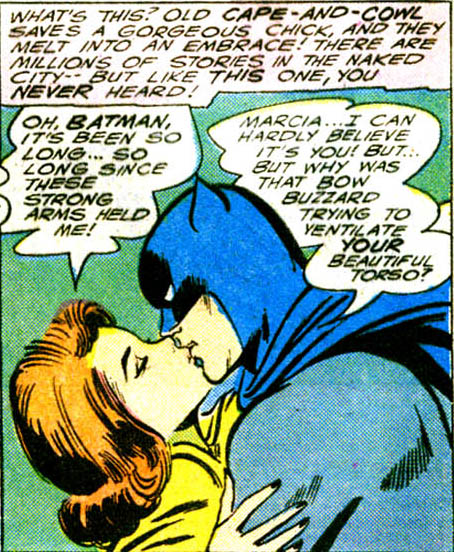


 A member of Rock's Easy Company suffers an undignified assault.