Total Pageviews

Showing posts with label Connie Willis. Show all posts

Wednesday, December 31, 2025

Quality over Quantity in a Time of Troubles: Books I Read in 2025


At last, 2025 is over. I'd hoped to surpass 100 books this year, but other things became more important. 

In 2025, I read

  • 67 works of fiction and 17 works of non-fiction
  • 39 science fiction novels, 17 mainstream novels, six Star Trek media tie-ins, and five fantasy novels
  • 26 books by women and 58 books by men
  • 42 books from the 2020s, 17 from the 2010s, nine from the 2000s, five from the 1990s, four from the 1980s, two from the 1970s, four from the 1960s, and one from the 1950s
COMMENTARY AND ANALYSIS

For the first time in a long time, only a couple of books this year were re-reads for me. This wasn't an intentional choice, but in retrospect it seems to have left me open to some wonderful discoveries. Here are my favourite reads of the year, plus a disappointment or two: 

I Who Have Never Known Men, by Jacqueline Harpman. 39 women and a girl are locked in an underground cage for years, then suddenly released to emerge to an emptied world, barren and inhospitable. Whatever calamity befell the world is left a mystery. A compelling rumination on the struggles of womanhood in hostile spaces, and a bleak commentary on human empathy--or the lack of it. 

Titan, by Stephen Baxter. I've never been Baxter's biggest fan, but 2025 was the right year for me to finally finish his so-called "NASA trilogy." The book's political climate eerily mirrors the troubles we're facing today, and as the world turns inward, NASA has one more shot to perform some pioneering science and exploration--a do or die, one-way trip to Saturn's largest moon, Titan. The technical details of the mission are fascinating, especially set against the frightening backdrop of an American government sliding into theocratic fascism. No parallels to 2025 in this book from 1997! Even more compelling are the battle for survival on Titan itself and the speculative leaps made by novel's end. 

A Short Stay in Hell, by Steven L. Peck. So it turns out that when we die, unless we follow Zoroastrianism (the one true faith; who knew?) we go to hell. Hell is a library that contains every book that fits onto 410 pages, and if you find the one book that tells your life story--without any spelling errors, typos, or grammatical errors--you're free to leave. Unfortunately, every letter, number, and punctuation mark is randomly generated, which means that the vast, vast majority of the trillions and trillions and trillions of books in Hell is garbage. Your book exists, but the time required to find it would take longer than the age of our universe. Much longer. There's no torture in hell, and its residents are supplied with good food and comfortable quarters. But there's no entertainment other than chatting or having sex, and no one gets sick. Of course, people can hurt and even kill each other, but you always wake up fully healed. Practically speaking, you're trapped in an eternity of boredom. This book terrified me. 

James, by Percival Everett. A retelling of Adventures of Huckleberry Finn from the perspective of Jim, the escaped slave befriended by Huck in Mark Twain's novel. Offers excellent perspective on the Black experience in white spaces--this is a rich novel, an angry novel, uncompromising in its critique of the world we've built. 

Julia, by Sandra Newman. George Orwell's 1984 seen through the eyes of Julia, Winston Smith's lover. It's just as bleak and nauseating as Orwell's original story, given more dimension thanks to its new perspective. We even get to see the fall of Oceania, an event foreshadowed by 1984's afterword. Spoiler: the new regime may or may not be an improvement on the old regime. 

Exordia, by Seth Dickinson. The first couple of chapters led me to believe this novel was going to be comic. I was wildly wrong. Dickinson's story of alien invasion is one of the scariest, most visceral, and most exciting examples of the trope in years. A wonderful cast of characters, human and alien, take us on a thrilling rollercoaster ride. It's smart, fun, terrifying, and satisfying. 

The Bridges of Madison County, by Robert James Waller. This is one of several books I read from Mom's collection after her passing. I wasn't expecting to enjoy this novel as much as I did, but I admit to tearing up by the end. A beautiful love story that captures the feeling of those special moments in time we know must be brief, but stay with us forever. 

The Compound, by Aisling Rawle. 20 (quickly 19) young men and women play out a dystopian version of Big Brother against the backdrop of the world we might live in in just a few years--a catastrophically warming world with constant wildfires and resource shortages, civilization finally beginning to play the price of our greed and ignorance. The Compound is a thoughtful critique of consumerism, the male gaze, and violence--but it offers a thread of hope in its tale of resilience and reconciliation. Or, if not hope--then at least some grace. 

The Rose Field, by Philip Pullman. I was enjoying the last of Pullman's Lyra Silvertongue novels until about three-quarters of the way through, when Pullman seems to lose focus and direction. The big action setpiece feels like it's been inspired by a video game or a poorly-run Dungeons & Dragons campaign, and the ending, well...I think the only word is anticlimactic. Although maybe ironic also fits, since a search to recapture Lyra's imagination seems to end in a rote critique of runaway progress--a topic handled with far more dexterity by The Compound, above. 

Prelude to Space, by Arthur C. Clarke. Clarke chose the perfect title for this one; it really is a prelude to the big space adventures we never get to see. Instead, Clarke covers the technical and bureaucratic challenges of getting men (of course men) into orbit. I found it interesting, but most readers will consider this very, very dry. Which it is. 

I'm Thinking of Ending Things, Foe, and We Spread, by Iain Reid. Nothing is what it seems in Reid's work, and I love that. All three novels are creepy, atmospheric, heartbreaking, mysterious, and best left unspoiled. I ached deeply for all his poor doomed protagonists, trapped in worlds they never made. 

Weird Medieval Guys, by Olivia Swarthout. Gorgeously designed, brilliantly illustrated, and hilarious, a balm for my battered nerves this year, a great gift from Leslie. 

The Gone World and Tomorrow and Tomorrow by Tom Sweterlitsch. I wish this guy would write more novels! Sweterlitsch combines deeply sympathetic characters with high-concept speculative fiction settings and challenges in a way that's unlike any other writer. 

And finally, this year I read the seven existing novels in Matt Dinniman's
Dungeon Crawler Carl series. Not only are they great fun, especially for anyone who's ever played a tabletop role playing game, the bad puns, crass humour, bloodthirsty violence, and existential dread are tempered by a truly empathetic and humanistic outlook; Carl, our protagonist, never gives in to despair or hate despite the cruelty of the alien invaders who have turned Earth into the latest of their sadistic interstellar reality show playgrounds, wiping out almost all life on the planet. 


MONTH-BY-MONTH

January: 11
The Dead Fathers Club (Matt Haig, 2006)
The Possession of Mr Cave (Matt Haig, 2008)
Notes on a Nervous Planet (Matt Haig, 2018)
Julia (Sandra Newman, 2023) 
How to be Perfect (Michael Schur, 2022) 
Tower of Glass (Robert Silverberg, 1970) 
Light Raid (Connie Willis and Cynthia Felice, 1989) 
Take a Look at the Five and Ten (Connie Willis, 2020) 
Seasons of Light and Darkness (Michael A. Martin, 2014) 
Golden State (Ben H. Winters, 2019) 
Terra Incognita (Connie Willis, 2018) 

February: 10
Some Desperate Glory (Emily Tesh, 2023) 
The Art of Mike Grell Volume 1 (Mike Grell, Tom Monarch, and Jeff Messer, 2025) 
Water Witch (Connie Willis and Cynthia Felice, 1982) 
The Fall Risk (Abby Jiminez, 2025) 
Promised Land (Connie Willis and Cynthia Felice, 1996) 
The Armageddon Engine (James Swallow, 2024) 
The You You Are: A Spiritual Biography of You (Ricken Lazlo Hale, 2022) 
Vulcan’s Soul Book I: Exodus (Josepha Sherman and Susan Shwartz, 2004) 
I Who Have Never Known Men (Jacqueline Harpman, 1995) 
Shadow Play (James Swallow, 2024)

March
The Whole Man (John Brunner, 1967) 
Titan (Stephen Baxter, 1997) 
The Godwhale (T.J. Bass, 1974) 
Star Trek: Lost to Eternity (Greg Cox, 2024)

April
American Housewife (Anita Abriel, 2025) 
Exordia (Seth Dickinson, 2023) 
Dungeon Crawler Carl (Matt Dinniman, 2020) 
Carl’s Doomsday Scenario (Matt Dinniman, 2021) 
The Dungeon Anarchist’s Cookbook (Matt Dinniman, 2021) 
The Gate of the Feral Gods (Matt Dinniman, 2021) 

May
The Butcher’s Masquerade (Matt Dinniman, 2022)  
Thirteen Days: A Memoir of the Cuban Missile Crisis (Robert F. Kennedy, 1969) 

June
The Eye of the Bedlam Bride (Matt Dinniman, 2023)
George Perez: Storyteller (Christopher Lawrence, 2006)
This Inevitable Ruin (Matt Dinniman, 2024) 

July
Never Flinch (Stephen King, 2025) 
James (Percival Everett, 2024) 
The Enemy Within (Kristine Kathryn Rusch, 2014) 
Rapport: Friendship, Solidarity, Communion, Empathy (Martha Wells, 2025)
White Eagle Speaks: Reflections of Lives and Passing Thoughts (Leonard Carriere, 2000) 
Prairie Light (Courtney Milne, 1985) 
Keith Langergraber: Theatre of the Exploding Sun (Liz Wylie, 2013) 
Shadow of the Machine (Scott Harrison, 2015) 
The More Things Change (Scott Pearson, 2014) 
Christmas with Norman Rockwell (John Kirk, 1990) 
The Professionals (Keith Langergraber, 2016) 
The Adventure of the Demonic Ox (Lois McMaster Bujold, 2025) 

August
Vulcan’s Soul Book II: Exiles (Josepha Sherman and Susan Shwartz, 2006) 
The Making of The African Queen, or How I Went to Africa with Bogart, Bacall, and Huston and Almost Lost My Mind (Katherine Hepburn, 1987) 
The Bridges of Madison County (Robert James Waller, 1992) 
The End of the World as We Know It (Christopher Golden, 2025) 
A Short Stay in Hell (Steven L. Peck, 2012) 
When the Moon Hits Your Eye (John Scalzi, 2025) 

September
I Hope This Finds You Well (Natalie Sue, 2024) 
The Gone World (Tom Sweterlitsch, 2018) 
Tomorrow and Tomorrow (Tom Sweterlitsch, 2014) 
Dominion (C.J. Sansom, 2012) 
Not Quite by the Book (Julie Hatcher, 2025) 
The Shattered Peace (John Scalzi, 2025) 
The Art of Fantastic Four (John Lind, 2025)
A New History of the Future in 100 Objects: A Fiction (Adrian Hon, 2020) 

October
3 Days, 9 Months, 27 Years (John Scalzi, 2025) 
The Intergalactic Interloper (Delas Heras, 2020) 
Best of All Worlds (Kenneth Oppel, 2025) 
Back to the Future: A Visual History (Michael Klastorin, Randal Atamaniuk, 2015) 
Weird Medieval Guys (Olivia Swarthout, 2023) 
Final Orbit (Chris Hadfield, 2025) 
Silver Screen Fiend (Patton Oswalt, 2015) 
I’m Thinking of Ending Things (Iain Reid, 2016) 
Foe (Iain Reid, 2018) 
We Spread (Iain Reid, 2022) 

November
Prelude to Space (Arthur C. Clarke, 1951) 
Assassins from Tomorrow (Peter Heath, 1967) 
The Productions of Time (John Brunner, 1967) 
The Collected Essex County (Jeff Lemire, 2009) 
The Rose Field (Philip Pullman, 2025) 

December
Testimony of Mute Things (Lois McMaster Bujold, 2025) 
The Compound (Aisling Rawle, 2025) 
Ten Thousand Light Years from Okay (Tracy Dobmeier and Wendy Katzman, 2025) 
The Witch Doesn’t Burn in This One (Amanda Lovelace, 2018)
The Mermaid’s Voice Returns in This One (Amanda Lovelace, 2019) 
Machines Like Me (Ian McEwan, 2025) 
Gold Dust (Catherine Asaro, 2025) 

And so ends 2025. Check out Bruce's list, and now you can see what Leslie was reading, listening to, and experiencing in 2025. 


Tuesday, December 31, 2024

There Will Be Time (to Read): Books I Read in 2024

Two years running! 

For the second year in a row, I've read 100 books in 12 months. That number used to be what I considered a minimum annual number for me, but as chronicled here at The Earliad, my speed and focus have diminished somewhat with the growing responsibilities and waning capabilities of middle age. Maybe I'm rebuilding to what used to be my old normal? 

OVERVIEW

In 2024, I read

  • 83 works of fiction and 17 works of non-fiction
  • 52 science fiction novels, 15 Star Trek media tie-ins, 11 mainstream, three horror, and two fantasy
  • 33 books by women and 67 books by men
  • 28 books from the 2020s, 18 from the 2010s, 18 from the 2000s, 13 from the 1990s, six from the 1980s, eight from the 1970s, 4 from the 1960s, 3 from the 1950s, and one each from the 1940s and 1890s. 
  • Eight books by Hugh Howey, six by Catherine Asaro, four by Stephen Baxter, and three each from Robert Silverberg, Jo Walton, and Connie Willis
   COMMENTARY AND ANALYSIS

Of the books I read this year, 30 were re-reads from authors including Jo Walton, Connie Willis, Stephen King, Robert Heinlein, Patricia Highsmith, Stephen Baxter, Les Daniels, Isaac Asimov, and others. 

I also revisited several works by Catherine Asaro while at the same time reading her newest novels for the first time. Prior to this year I hadn't read her first novel, Primary Inversion, since it was released as a mass market paperback in 1995. I was still in my 20s! The horror. I found myself surprised by how much plot is crammed into Primary Inversion; I could have sworn at least a couple of its major events occurred in later books of the Skolian Empire series. 

Speaking of the 1990s, I picked up B.F. Skinner's Walden Two at the Wee Book Inn sometime during that decade. It sat on a shelf until Skinner's name came up in the infamous orientation film featured in the season two premiere of Lost. Having read only the back cover to that point, I figured I'd read the book to see if there were any clues to what might be going on in the world of the show. Unfortunately, Skinner's prose is incredibly dry, so I put the book aside until, well, this year. Walden Two is really more manifesto than novel, and reads like a professor's self-assured polemic against the status quo as it was back in the 1940s. His solution, which in hindsight absolutely informed the Dharma Initiative backstory for Lost, was utopian social engineering, a method for creating self-sufficient communes free of want and violence. 

Walden Two was something of a curiosity for me this year, so I'll turn to the books that really impressed me (for good or ill) in 2024: 

  • The Ministry for the Future, Kim Stanley Robinson, 2020. This near-future SF novel begins with a catastrophic heat wave in India that kills millions and triggers, at last, serious global action on climate change. It's a harrowing read, because Robinson describes an all-too-plausible future of diminishing resources and increasing violence. The titular Ministry is tasked with overseeing a kind of holding action against the collapse of civilization, and he goes into some fascinating detail about the societal changes required to achieve a best-case scenario that, from our perspective today, remains terrifying to contemplate. 
  • System Collapse, Martha Wells, 2023. Another Murderbot tale, yay! 
  • Demon Daughter and Penric and the Bandit, Lois McMaster Bujold, 2023 and 2024. More Penric and Desdemona adventures, yay! 
  • The Road to Roswell, Connie Willis, 2023. A lovely comedic tale of love, aliens, and UFO enthusiasts pratfalling around the deserts of the US southwest. Seems timely in the wake of all the UAP buzz in the news this year. 
  • Shift and Dust by Hugh Howley, 2013. I read Wool, the first of Howley's Silo books, way back in the teens, but only finished the series this year. I really enjoyed Shift, which explains the origins of the mysterious silos, and Dust was a satisfying conclusion, though the series epilogue in the Silo collection left something of a bittersweet taste in my mouth. 
  • Shadrach in the Furnace, Robert Silverberg, 1976. I've been working my way through the Hugo and Nebula nominations for years now, and Robert Silverberg has his share of those nominations, of which I read three in 2024. Shadrach in the Furnace was my favourite, a psychedelic fever dream of body horror, totalitarian dystopia, and state surveillance. 
  • Never Let Me Go, Kzuo Ishiguro, 2005. In science fiction there are several examples of a peculiar trope involving societies that grow clones strictly to harvest their organs to extend the lives of the rich and powerful. Ishiguro weaves a dreadful poignancy into the trope, gently bringing us into the world of several such clones who are conditioned from birth to accept and embrace their fate. It's heartbreaking, as any such inhuman system should be. Inhuman? No. All too depressingly human, and something that could plausibly happen someday...if it hasn't already in some dark corner of the world. 
  • Planet X, Michael Jan Friedman, 1998). Not all media tie-in novels are bad. Planet X is bad. Very bad. Imagine a world in which Marvel's X-Men meet up with Captain Jean-Luc Picard of the USS Enterprise to investigate the sudden appearance of new mutants springing up on a non-aligned world in the Star Trek universe. The original X-Men comics have been rightly identified as a solid vehicle for telling stories about prejudice and othering, and that's the theme Planet X tries to take. It's not an awful idea on its face, but the novel reads like a kid playing with random action figures, mashing them together with sound and fury. 

MONTH-BY-MONTH

January
The Taking of Pelham One Two Three (John Godey, 1973) 
Dawn of Rebellion: The Visual Guide (Pablo Hidalgo and Emily Shkoukani, 2023)
The Ministry for the Future (Kim Stanley Robinson, 2020)  
The Jigsaw Assassin (Catherine Asaro, 2022) 
Double or Nothing (Kim Sherwood, 2023) 
The Lost Worlds of 2001 (Arthur C. Clarke, 1972)
The Turning of the Screw (Henry James, 1898) 
Voyage (Stephen Baxter, 1996) 
System Collapse (Martha Wells, 2023) 
The Zombie Survival Guide (Max Brooks, 2003) 

February
World War Z: An Oral History of the Zombie War (Max Brooks, 2006)  
Demon Daughter (Lois McMaster Bujold, 2023)
There Will Be Time (Poul Anderson, 1972) 
Moonseed (Stephen Baxter, 1998) 
The Star Fox (Poul Anderson, 1965) 
The Spacetime Pool (Catherine Asaro, 2008) 
Life After God (Douglas Coupland, 1994) 
The Road to Roswell (Connie Willis, 2023) 
Superman: The Complete History (Les Daniels, 1998) 
Primary Inversion (Catherine Asaro, 1995) 

March
Turtles All the Way Down (John Green, 2017) 
The Last Hawk (Catherine Asaro, 1997) 
More Than the Sum of His Parts: Collected Stories (Joe Haldeman, 2020) 
Wool (Hugh Howley, 2012) 
Shift (Hugh Howley, 2013)
Dust (Hugh Howley, 2013) 
Silo (Hugh Howley, 2020) 
Girls, Interrupted: How Pop Culture Is Failing Women (Lisa Whittington-Hill, 2024) 
Space (James Michener, 1982) 
Just the Nicest Couple (Mary Kubica, 2023) 

April
Firestarter (Stephen King, 1980)
Walden Two (B.F. Skinner, 1948)
Homecoming (Christie Golden, 2003) 
The Giver (Lois Lowry, 1993)  
Batman: The Complete History (Les Daniels, 1999) 
Flood (Stephen Baxter, 2008) 
The End of the World Is Just the Beginning (Peter Zeihan, 2022) 
The Farther Shore (Christie Golden, 2003) 
The Bicentennial Man and Other Stories (Isaac Asimov, 1976)
Burn (Bill Ransom, 1995) 

May
A Choice of Catastrophes (Michael Schuster and Steve Mollmann, 2011) 
Crisis of Consciousness (Dave Galanter, 2015) 
Savage Trade (Tony Daniel, 2015)
Beacon 23 (Hugh Howley, 2015) 
With a Mind to Kill (Anthony Horowitz, 2022)  
Never Let Me Go (Kazuo Ishiguro, 2005) 
The Downloaded (Robert J. Sawyer, 2024) 
When the Sparrow Falls (Neil Sharpson, 2021) 
Shadrach in the Furnace (Robert Silverberg, 1976) 
The Stochastic Man (Robert Silverberg, 1975) 

June
Thorns (Robert Silverberg, 1967) 
You Like It Darker (Stephen King, 2024) 
Half Way Home (Hugh Howey, 2010) 
Wonder Woman: The Complete History (Les Daniels, 2000) 
Sand (Hugh Howey, 2014)
The Speed of Dark (Elizabeth Moon, 2002) 
Black Fire (Sonni Cooper, 1983) 
Finding Serenity (Jane Espenson, 2004) 

July
Across the Sand (Hugh Howey, 2022)
Foundation’s Triumph (David Brin, 1999) 
Ark (Stephen Baxter, 2009)
Planet X (Michael Jan Friedman, 1998)
Mr. Scott’s Guide to the Enterprise (Shane Johnson, 1987) 
The Three-Minute Universe (Barbara Paul, 1988) 
No Time Like the Past (Greg Cox, 2014) 

August
Penric and the Bandit (Lois McMaster Bujold, 2024) 
The Incident Report (Martha Baillie, 2009) 
Nuclear War: A Scenario (Annie Jacobson, 2024) 
Godzilla and Godzilla Raids Again (Shiguru Kayama, 1955) 
The Man Who Saw Seconds (Alexander Boldizar, 2024)
Serpents in the Garden (Jeff Mariotte, 2014)
The Ministry of Time (Kaliane Bradley, 2024) 
The Rings of Time (Greg Cox, 2012) 
The Last Day (Andrew Hunter Murray, 2020)  
S.H.A.D.O. Technical Operations Manual (Chris Thompson and Andrew Clements, 2022)

September
The Twin Paradox (Charles Wachter, 2020) 
The Down Deep (Catherine Asaro, 2024) 
Report from Planet Midnight (Nalo Hopkinson, 2012) 
The Talented Mr. Ripley (Patricia Highsmith, 1955) 

October
Humans: An A to Z (Matt Haig, 2014) 
Pawns and Symbols (Majliss Larson, 1985)
What Entropy Means to Me (George Alec Effinger, 1972) 
Cast No Shadow (James Swallow, 2011) 
Half Past Human (TJ Bass, 1971) 
Here (Richard McGuire, 2014) 

November
Tunnel in the Sky (Robert Heinlein, 1955) 
The Hollow Man (Dan Simmons, 1992) 
Farthing (Jo Walton, 2006) 
Ha’penny (Jo Walton, 2007) 
Jane: The Woman Who Loved Tarzan (Robin Maxwell, 2012) 
The Time Traveler’s Wife (Audrey Niffenegger, 2003) 
Half a Crown (Jo Walton, 2008) 

December
Miracle and Other Christmas Stories (Connie Willis, 1999)
The Art of the Amazing Spider-Man (John Romita and Stan Lee, 2024) 
Fantastic Four: Full Circle Expanded Edition (Alex Ross, 2024) 
Time Tunnel (Murray Leinster, 1964) 
DC Comics Style Guide (Paul Levitz, 2024) 
The Wailing Asteroid (Murray Leinster, 1960) 
The Dead Hand: The Untold Story of the Cold War Arms Race and Its Dangerous Legacy (David E. Hoffman, 2009) 
The Life Impossible (Matt Haig, 2024) 

And finally, here are Bruce and Leslie's stats for 2024! 

That's it for 2024. Happy New Year, all. Keep fighting the good fight. 


Friday, December 31, 2021

Books I Read in 2021


In 2021 I read 58 books, a personal all-time low. As you'll see from the list below, I didn't attempt to tackle anything particularly challenging. The stress of 21st-century existence leaves me with diminished capacity; escaping into film taxes me far less than slipping into a book these days, a truth that profoundly saddens me, but one I can no longer deny. Silver lining: for the first time, I read as many books by women as by men. 

In 2021 I sought out escapist fare, often re-reading old favourites that took me back to comfortable alternate realities and in some sense to a more vital past self. Somewhere between a quarter and a third of the books I read are non-fiction, mainly covering topics in popular culture. 

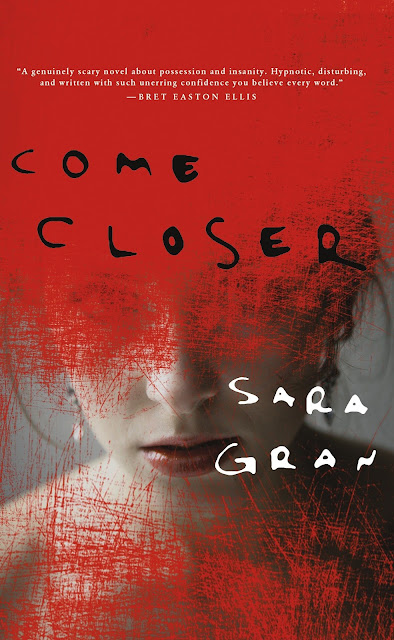
A couple of novels stand out. Severance, by Ling Ma, uncannily anticipates the COVID-19 catastrophe and, like the real disaster, reveals the silliness and futility of the ways we live and work in the modern world, how the systems we've built serve only a select few. Come Closer, by Sara Gran, is one of the scariest novels I've ever read, and one of the most heartbreaking. It's the internal monologue of a woman who is either going insane or is genuinely being slowly and methodically possessed by a demon, and Gran's touch is so deft and sure that the moments of terror come out of nowhere, seeming to slip between the sentences so that by the time you realize what's happening to you and the protagonist, it's too late to brace yourself for the abyss. 

Martha Wells continues to impress with her Murderbot diaries, and I'm still enjoying my journeys through the works of Jo Walton. I indulged in a couple of near-legendary works of dreadful fan fiction: Jim Theis' The Eye of Argon and Tara Gilesbie's My Immortal. Anyone who enjoys art gone wrong will love these. 

Thanks to Leslie, I learned that I'd fallen behind on Lois McMaster Bujold's Penric series. Catching up was like going on a short trip with an old friend, carefree and pleasant. Bujold remains a favourite, and I hope she keeps writing for a long time. 

Finally, I was delighted to discover that Ulrich Haarburste released his cycle of Roy Orbison in clingfilm stories, expanded to novel length. If you don't feel like buying the book, sample some of the stories

Here's the list of what I read this year: 

January: 10
Or What You Will
(Jo Walton, 2020) 
Star Trek Adventures Quickstart Guide (Modiphius, 2017) 
Axiom’s End (Lindsay Ellis, 2020) 
The Vanished Seas (Catherine Asaro, 2020)
Lightning Strike, Book One (Catherine Asaro, 2014) 
Lightning Strike, Book Two (Catherine Asaro, 2020) 
Carrie (Stephen King, 1974) 
Way Station (Clifford D. Simak, 1963) 
The Wounded Sky (Diane Duane, 1983) 
My Enemy, My Ally (Diane Duane, 1984) 

February: 7
The Lightest Object in the Universe
(Kimi Eisele, 2019) 
DC Comics Covers (Nick Jones, 2020) 
DC Comics Supervillains: The Complete Visual History (Daniel Wallace, 2014) 
Art of Star Wars: The Mandalorian (Phil Szostak, 2020) 
The Big Lie (Julie Mayhew, 2015) 
Passage (Connie Willis, 2001) 
The Romulan Way (Diane Duane and Peter Morwood, 1987) 

March: 6
The Eye of Argon
(Jim Theis, 1970) 
My Immortal (Tara Gilesbie, 2006) 
Later (Stephen King, 2021) 
Star Wars Complete Vehicles New Edition (Kerrie Dougherty, 2020) 
To Lose the Earth (Kristen Beyer, 2020) 
Severance (Ling Ma, 2018) 

April: 3
The World of Cyberpunk 2077 (Marcin Batylda, 2020) 
Classics Illustrated: A Cultural History, with Illustrations (William B. Jones Jr., 2001) 
Seduction of the Innocent: The Influence of Comic Books on Today’s Youth (Fredric Wertham, 1954)
 
May: 3
The Ten Thousand Doors of January (Alix E. Harrow, 2019)
Home: Habitat, Range, Niche, Territory (Martha Wells, 2020) 
Fugitive Telemetry (Martha Wells, 2021) 

June: 2
Ulrich Haarburste’s Novel of Roy Orbison in Clingfilm: Plus additional stories (Ulrich Haarburste, 2019) 
Forbidden Knowledge: 101 Things No One Should Know How to Do (Owen Brooks, 2019) 

July: 3
Critical Failures (Robert Bevan, 2012) 
Living Memory (Christopher L. Bennett, 2021) 
Come Closer (Sara Gran, 2003) 

August: 5
The Physicians of Vilnoc (Lois McMaster Bujold, 2020) 
Masquerade in Lodi (Lois McMaster Bujold, 2020)
The Assassins of Thasalon (Lois McMaster Bujold, 2021)
Billy Summers (Stephen King, 2021) 
The Princess Saves Herself in This One (Amanda Lovelace, 2016)

September: 2
Then Everything Changed (Jeff Greenfield, 2011) 
The Stand (Stephen King, 1980) 

October: 2
Available Light (Dayton Ward, 2019) 
Knot of Shadows (Lois McMaster Bujold, 2021) 

November: 7
The Apollo Murders (Chris Hadfield, 2021)
Visiting Friends: Or, What I Did on My Summer Vacation (Jo Walton, 2021) 
Project Hail Mary (Andy Weir, 2021)
2034 (Elliot Ackerman and Admiral James Stavridis, 2021) 
Untold Horror (Dave Alexander, 2021) 
The History of Science Fiction: A Graphic Novel Adventure (Xavier Dollo, 2021) 
Forever and a Day (Anthony Horowitz, 2018) 

December: 7
The Steranko History of Comics, Volume One (Jim Steranko, 1970) 
The Steranko History of Comics, Volume Two (Jim Steranko, 1972)
All in Color for a Dime (Richard A. Lupoff and Don Thompson, 1970) 
Comix: A History of Comic Books in America ( Les Daniels, 1971) 
The Psychology of Time Travel (Kate Mascarenhas, 2018) 
The Grownup (Gillian Flynn, 2014) 
Hench (Natalie Zina Walschots, 2020) 

Fiction: 42
Nonfiction: 15
Poetry: 1

Genre
Fantasy: 8
Horror: 3
Mainstream: 11
Science Fiction: 14
Star Trek: 6

Top Authors
Lois McMaster Bujold: 4
Stephen King: 4
Catherine Asaro: 3
Diane Duane: 3
Jim Steranko: 2
Jo Walton: 2
Martha Wells: 2


Books by Women: 29
Books by Men: 29

Books by Decade
1950s: 1
1960s: 1
1970s: 6
1980s: 4
2000s: 4
2010s: 16
2020s: 25 

Friday, April 07, 2017

Crosstalk

I've just started Connie Willis' new book, Crosstalk, and already I'm completely charmed. Willis is remarkably deft at combining the sense of wonder so important to speculative fiction with likable characters and great wit and whimsy. In Crosstalk, a new technology gives people the ability to make empathic connections wirelessly; though hailed as a revolutionary step in human relations, complications ensue...

While I've only just started the book, I'm already reminded why I love Willis' work so much. She remains one of the best SF authors of the modern era.