Total Pageviews

Showing posts with label Lois McMaster Bujold. Show all posts

Tuesday, December 31, 2024

There Will Be Time (to Read): Books I Read in 2024

Two years running! 

For the second year in a row, I've read 100 books in 12 months. That number used to be what I considered a minimum annual number for me, but as chronicled here at The Earliad, my speed and focus have diminished somewhat with the growing responsibilities and waning capabilities of middle age. Maybe I'm rebuilding to what used to be my old normal? 

OVERVIEW

In 2024, I read

  • 83 works of fiction and 17 works of non-fiction
  • 52 science fiction novels, 15 Star Trek media tie-ins, 11 mainstream, three horror, and two fantasy
  • 33 books by women and 67 books by men
  • 28 books from the 2020s, 18 from the 2010s, 18 from the 2000s, 13 from the 1990s, six from the 1980s, eight from the 1970s, 4 from the 1960s, 3 from the 1950s, and one each from the 1940s and 1890s. 
  • Eight books by Hugh Howey, six by Catherine Asaro, four by Stephen Baxter, and three each from Robert Silverberg, Jo Walton, and Connie Willis
   COMMENTARY AND ANALYSIS

Of the books I read this year, 30 were re-reads from authors including Jo Walton, Connie Willis, Stephen King, Robert Heinlein, Patricia Highsmith, Stephen Baxter, Les Daniels, Isaac Asimov, and others. 

I also revisited several works by Catherine Asaro while at the same time reading her newest novels for the first time. Prior to this year I hadn't read her first novel, Primary Inversion, since it was released as a mass market paperback in 1995. I was still in my 20s! The horror. I found myself surprised by how much plot is crammed into Primary Inversion; I could have sworn at least a couple of its major events occurred in later books of the Skolian Empire series. 

Speaking of the 1990s, I picked up B.F. Skinner's Walden Two at the Wee Book Inn sometime during that decade. It sat on a shelf until Skinner's name came up in the infamous orientation film featured in the season two premiere of Lost. Having read only the back cover to that point, I figured I'd read the book to see if there were any clues to what might be going on in the world of the show. Unfortunately, Skinner's prose is incredibly dry, so I put the book aside until, well, this year. Walden Two is really more manifesto than novel, and reads like a professor's self-assured polemic against the status quo as it was back in the 1940s. His solution, which in hindsight absolutely informed the Dharma Initiative backstory for Lost, was utopian social engineering, a method for creating self-sufficient communes free of want and violence. 

Walden Two was something of a curiosity for me this year, so I'll turn to the books that really impressed me (for good or ill) in 2024: 

  • The Ministry for the Future, Kim Stanley Robinson, 2020. This near-future SF novel begins with a catastrophic heat wave in India that kills millions and triggers, at last, serious global action on climate change. It's a harrowing read, because Robinson describes an all-too-plausible future of diminishing resources and increasing violence. The titular Ministry is tasked with overseeing a kind of holding action against the collapse of civilization, and he goes into some fascinating detail about the societal changes required to achieve a best-case scenario that, from our perspective today, remains terrifying to contemplate. 
  • System Collapse, Martha Wells, 2023. Another Murderbot tale, yay! 
  • Demon Daughter and Penric and the Bandit, Lois McMaster Bujold, 2023 and 2024. More Penric and Desdemona adventures, yay! 
  • The Road to Roswell, Connie Willis, 2023. A lovely comedic tale of love, aliens, and UFO enthusiasts pratfalling around the deserts of the US southwest. Seems timely in the wake of all the UAP buzz in the news this year. 
  • Shift and Dust by Hugh Howley, 2013. I read Wool, the first of Howley's Silo books, way back in the teens, but only finished the series this year. I really enjoyed Shift, which explains the origins of the mysterious silos, and Dust was a satisfying conclusion, though the series epilogue in the Silo collection left something of a bittersweet taste in my mouth. 
  • Shadrach in the Furnace, Robert Silverberg, 1976. I've been working my way through the Hugo and Nebula nominations for years now, and Robert Silverberg has his share of those nominations, of which I read three in 2024. Shadrach in the Furnace was my favourite, a psychedelic fever dream of body horror, totalitarian dystopia, and state surveillance. 
  • Never Let Me Go, Kzuo Ishiguro, 2005. In science fiction there are several examples of a peculiar trope involving societies that grow clones strictly to harvest their organs to extend the lives of the rich and powerful. Ishiguro weaves a dreadful poignancy into the trope, gently bringing us into the world of several such clones who are conditioned from birth to accept and embrace their fate. It's heartbreaking, as any such inhuman system should be. Inhuman? No. All too depressingly human, and something that could plausibly happen someday...if it hasn't already in some dark corner of the world. 
  • Planet X, Michael Jan Friedman, 1998). Not all media tie-in novels are bad. Planet X is bad. Very bad. Imagine a world in which Marvel's X-Men meet up with Captain Jean-Luc Picard of the USS Enterprise to investigate the sudden appearance of new mutants springing up on a non-aligned world in the Star Trek universe. The original X-Men comics have been rightly identified as a solid vehicle for telling stories about prejudice and othering, and that's the theme Planet X tries to take. It's not an awful idea on its face, but the novel reads like a kid playing with random action figures, mashing them together with sound and fury. 

MONTH-BY-MONTH

January
The Taking of Pelham One Two Three (John Godey, 1973) 
Dawn of Rebellion: The Visual Guide (Pablo Hidalgo and Emily Shkoukani, 2023)
The Ministry for the Future (Kim Stanley Robinson, 2020)  
The Jigsaw Assassin (Catherine Asaro, 2022) 
Double or Nothing (Kim Sherwood, 2023) 
The Lost Worlds of 2001 (Arthur C. Clarke, 1972)
The Turning of the Screw (Henry James, 1898) 
Voyage (Stephen Baxter, 1996) 
System Collapse (Martha Wells, 2023) 
The Zombie Survival Guide (Max Brooks, 2003) 

February
World War Z: An Oral History of the Zombie War (Max Brooks, 2006)  
Demon Daughter (Lois McMaster Bujold, 2023)
There Will Be Time (Poul Anderson, 1972) 
Moonseed (Stephen Baxter, 1998) 
The Star Fox (Poul Anderson, 1965) 
The Spacetime Pool (Catherine Asaro, 2008) 
Life After God (Douglas Coupland, 1994) 
The Road to Roswell (Connie Willis, 2023) 
Superman: The Complete History (Les Daniels, 1998) 
Primary Inversion (Catherine Asaro, 1995) 

March
Turtles All the Way Down (John Green, 2017) 
The Last Hawk (Catherine Asaro, 1997) 
More Than the Sum of His Parts: Collected Stories (Joe Haldeman, 2020) 
Wool (Hugh Howley, 2012) 
Shift (Hugh Howley, 2013)
Dust (Hugh Howley, 2013) 
Silo (Hugh Howley, 2020) 
Girls, Interrupted: How Pop Culture Is Failing Women (Lisa Whittington-Hill, 2024) 
Space (James Michener, 1982) 
Just the Nicest Couple (Mary Kubica, 2023) 

April
Firestarter (Stephen King, 1980)
Walden Two (B.F. Skinner, 1948)
Homecoming (Christie Golden, 2003) 
The Giver (Lois Lowry, 1993)  
Batman: The Complete History (Les Daniels, 1999) 
Flood (Stephen Baxter, 2008) 
The End of the World Is Just the Beginning (Peter Zeihan, 2022) 
The Farther Shore (Christie Golden, 2003) 
The Bicentennial Man and Other Stories (Isaac Asimov, 1976)
Burn (Bill Ransom, 1995) 

May
A Choice of Catastrophes (Michael Schuster and Steve Mollmann, 2011) 
Crisis of Consciousness (Dave Galanter, 2015) 
Savage Trade (Tony Daniel, 2015)
Beacon 23 (Hugh Howley, 2015) 
With a Mind to Kill (Anthony Horowitz, 2022)  
Never Let Me Go (Kazuo Ishiguro, 2005) 
The Downloaded (Robert J. Sawyer, 2024) 
When the Sparrow Falls (Neil Sharpson, 2021) 
Shadrach in the Furnace (Robert Silverberg, 1976) 
The Stochastic Man (Robert Silverberg, 1975) 

June
Thorns (Robert Silverberg, 1967) 
You Like It Darker (Stephen King, 2024) 
Half Way Home (Hugh Howey, 2010) 
Wonder Woman: The Complete History (Les Daniels, 2000) 
Sand (Hugh Howey, 2014)
The Speed of Dark (Elizabeth Moon, 2002) 
Black Fire (Sonni Cooper, 1983) 
Finding Serenity (Jane Espenson, 2004) 

July
Across the Sand (Hugh Howey, 2022)
Foundation’s Triumph (David Brin, 1999) 
Ark (Stephen Baxter, 2009)
Planet X (Michael Jan Friedman, 1998)
Mr. Scott’s Guide to the Enterprise (Shane Johnson, 1987) 
The Three-Minute Universe (Barbara Paul, 1988) 
No Time Like the Past (Greg Cox, 2014) 

August
Penric and the Bandit (Lois McMaster Bujold, 2024) 
The Incident Report (Martha Baillie, 2009) 
Nuclear War: A Scenario (Annie Jacobson, 2024) 
Godzilla and Godzilla Raids Again (Shiguru Kayama, 1955) 
The Man Who Saw Seconds (Alexander Boldizar, 2024)
Serpents in the Garden (Jeff Mariotte, 2014)
The Ministry of Time (Kaliane Bradley, 2024) 
The Rings of Time (Greg Cox, 2012) 
The Last Day (Andrew Hunter Murray, 2020)  
S.H.A.D.O. Technical Operations Manual (Chris Thompson and Andrew Clements, 2022)

September
The Twin Paradox (Charles Wachter, 2020) 
The Down Deep (Catherine Asaro, 2024) 
Report from Planet Midnight (Nalo Hopkinson, 2012) 
The Talented Mr. Ripley (Patricia Highsmith, 1955) 

October
Humans: An A to Z (Matt Haig, 2014) 
Pawns and Symbols (Majliss Larson, 1985)
What Entropy Means to Me (George Alec Effinger, 1972) 
Cast No Shadow (James Swallow, 2011) 
Half Past Human (TJ Bass, 1971) 
Here (Richard McGuire, 2014) 

November
Tunnel in the Sky (Robert Heinlein, 1955) 
The Hollow Man (Dan Simmons, 1992) 
Farthing (Jo Walton, 2006) 
Ha’penny (Jo Walton, 2007) 
Jane: The Woman Who Loved Tarzan (Robin Maxwell, 2012) 
The Time Traveler’s Wife (Audrey Niffenegger, 2003) 
Half a Crown (Jo Walton, 2008) 

December
Miracle and Other Christmas Stories (Connie Willis, 1999)
The Art of the Amazing Spider-Man (John Romita and Stan Lee, 2024) 
Fantastic Four: Full Circle Expanded Edition (Alex Ross, 2024) 
Time Tunnel (Murray Leinster, 1964) 
DC Comics Style Guide (Paul Levitz, 2024) 
The Wailing Asteroid (Murray Leinster, 1960) 
The Dead Hand: The Untold Story of the Cold War Arms Race and Its Dangerous Legacy (David E. Hoffman, 2009) 
The Life Impossible (Matt Haig, 2024) 

And finally, here are Bruce and Leslie's stats for 2024! 

That's it for 2024. Happy New Year, all. Keep fighting the good fight. 


Saturday, December 31, 2022

Books I Read in 2022: The Fail Edition


Blogger wiped out about 80% of what had been a 2,000 word post right before I could save it. And no, I didn't write it in Word first, like an idiot. 

I was pretty happy with what I'd written, too, and flew into a fit of angry depression thereafter. Happy New Year to me. Bah. 

Hopefully I can muster up the desire to rewrite this post in a couple of days, based on what little was saved. Sigh. 


Friday, December 31, 2021

Books I Read in 2021


In 2021 I read 58 books, a personal all-time low. As you'll see from the list below, I didn't attempt to tackle anything particularly challenging. The stress of 21st-century existence leaves me with diminished capacity; escaping into film taxes me far less than slipping into a book these days, a truth that profoundly saddens me, but one I can no longer deny. Silver lining: for the first time, I read as many books by women as by men. 

In 2021 I sought out escapist fare, often re-reading old favourites that took me back to comfortable alternate realities and in some sense to a more vital past self. Somewhere between a quarter and a third of the books I read are non-fiction, mainly covering topics in popular culture. 

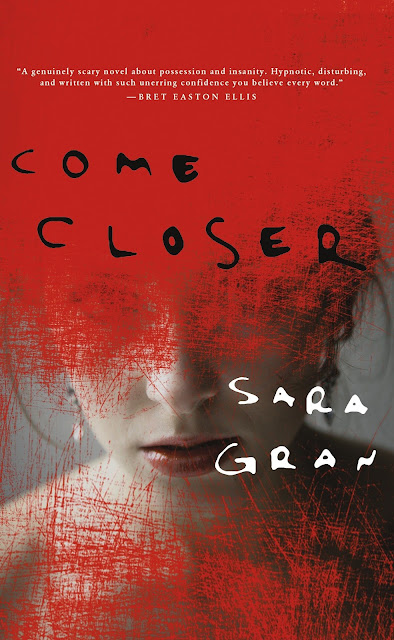
A couple of novels stand out. Severance, by Ling Ma, uncannily anticipates the COVID-19 catastrophe and, like the real disaster, reveals the silliness and futility of the ways we live and work in the modern world, how the systems we've built serve only a select few. Come Closer, by Sara Gran, is one of the scariest novels I've ever read, and one of the most heartbreaking. It's the internal monologue of a woman who is either going insane or is genuinely being slowly and methodically possessed by a demon, and Gran's touch is so deft and sure that the moments of terror come out of nowhere, seeming to slip between the sentences so that by the time you realize what's happening to you and the protagonist, it's too late to brace yourself for the abyss. 

Martha Wells continues to impress with her Murderbot diaries, and I'm still enjoying my journeys through the works of Jo Walton. I indulged in a couple of near-legendary works of dreadful fan fiction: Jim Theis' The Eye of Argon and Tara Gilesbie's My Immortal. Anyone who enjoys art gone wrong will love these. 

Thanks to Leslie, I learned that I'd fallen behind on Lois McMaster Bujold's Penric series. Catching up was like going on a short trip with an old friend, carefree and pleasant. Bujold remains a favourite, and I hope she keeps writing for a long time. 

Finally, I was delighted to discover that Ulrich Haarburste released his cycle of Roy Orbison in clingfilm stories, expanded to novel length. If you don't feel like buying the book, sample some of the stories

Here's the list of what I read this year: 

January: 10
Or What You Will
(Jo Walton, 2020) 
Star Trek Adventures Quickstart Guide (Modiphius, 2017) 
Axiom’s End (Lindsay Ellis, 2020) 
The Vanished Seas (Catherine Asaro, 2020)
Lightning Strike, Book One (Catherine Asaro, 2014) 
Lightning Strike, Book Two (Catherine Asaro, 2020) 
Carrie (Stephen King, 1974) 
Way Station (Clifford D. Simak, 1963) 
The Wounded Sky (Diane Duane, 1983) 
My Enemy, My Ally (Diane Duane, 1984) 

February: 7
The Lightest Object in the Universe
(Kimi Eisele, 2019) 
DC Comics Covers (Nick Jones, 2020) 
DC Comics Supervillains: The Complete Visual History (Daniel Wallace, 2014) 
Art of Star Wars: The Mandalorian (Phil Szostak, 2020) 
The Big Lie (Julie Mayhew, 2015) 
Passage (Connie Willis, 2001) 
The Romulan Way (Diane Duane and Peter Morwood, 1987) 

March: 6
The Eye of Argon
(Jim Theis, 1970) 
My Immortal (Tara Gilesbie, 2006) 
Later (Stephen King, 2021) 
Star Wars Complete Vehicles New Edition (Kerrie Dougherty, 2020) 
To Lose the Earth (Kristen Beyer, 2020) 
Severance (Ling Ma, 2018) 

April: 3
The World of Cyberpunk 2077 (Marcin Batylda, 2020) 
Classics Illustrated: A Cultural History, with Illustrations (William B. Jones Jr., 2001) 
Seduction of the Innocent: The Influence of Comic Books on Today’s Youth (Fredric Wertham, 1954)
 
May: 3
The Ten Thousand Doors of January (Alix E. Harrow, 2019)
Home: Habitat, Range, Niche, Territory (Martha Wells, 2020) 
Fugitive Telemetry (Martha Wells, 2021) 

June: 2
Ulrich Haarburste’s Novel of Roy Orbison in Clingfilm: Plus additional stories (Ulrich Haarburste, 2019) 
Forbidden Knowledge: 101 Things No One Should Know How to Do (Owen Brooks, 2019) 

July: 3
Critical Failures (Robert Bevan, 2012) 
Living Memory (Christopher L. Bennett, 2021) 
Come Closer (Sara Gran, 2003) 

August: 5
The Physicians of Vilnoc (Lois McMaster Bujold, 2020) 
Masquerade in Lodi (Lois McMaster Bujold, 2020)
The Assassins of Thasalon (Lois McMaster Bujold, 2021)
Billy Summers (Stephen King, 2021) 
The Princess Saves Herself in This One (Amanda Lovelace, 2016)

September: 2
Then Everything Changed (Jeff Greenfield, 2011) 
The Stand (Stephen King, 1980) 

October: 2
Available Light (Dayton Ward, 2019) 
Knot of Shadows (Lois McMaster Bujold, 2021) 

November: 7
The Apollo Murders (Chris Hadfield, 2021)
Visiting Friends: Or, What I Did on My Summer Vacation (Jo Walton, 2021) 
Project Hail Mary (Andy Weir, 2021)
2034 (Elliot Ackerman and Admiral James Stavridis, 2021) 
Untold Horror (Dave Alexander, 2021) 
The History of Science Fiction: A Graphic Novel Adventure (Xavier Dollo, 2021) 
Forever and a Day (Anthony Horowitz, 2018) 

December: 7
The Steranko History of Comics, Volume One (Jim Steranko, 1970) 
The Steranko History of Comics, Volume Two (Jim Steranko, 1972)
All in Color for a Dime (Richard A. Lupoff and Don Thompson, 1970) 
Comix: A History of Comic Books in America ( Les Daniels, 1971) 
The Psychology of Time Travel (Kate Mascarenhas, 2018) 
The Grownup (Gillian Flynn, 2014) 
Hench (Natalie Zina Walschots, 2020) 

Fiction: 42
Nonfiction: 15
Poetry: 1

Genre
Fantasy: 8
Horror: 3
Mainstream: 11
Science Fiction: 14
Star Trek: 6

Top Authors
Lois McMaster Bujold: 4
Stephen King: 4
Catherine Asaro: 3
Diane Duane: 3
Jim Steranko: 2
Jo Walton: 2
Martha Wells: 2


Books by Women: 29
Books by Men: 29

Books by Decade
1950s: 1
1960s: 1
1970s: 6
1980s: 4
2000s: 4
2010s: 16
2020s: 25 

Tuesday, December 31, 2019

Books I Read in 2019

For the first time since 2016, I read more books this year than last, though I still fell short of the 123 books I read in 2017 and my record of 135 the year previous. I read 103 books in 2019, short of my revised target of 136.

Here's how my year in books broke down:

Books by Women: 39
Books by Men: 64
I read more women this year than last, not quite approaching parity, but getting closer with a roughly 60/40 men to women ratio.

Nonfiction: 8
Fiction: 95

I read less nonfiction this year than last, but more than made up for the deficit by reading more fiction.

Genre
Fantasy: 10
Mainstream: 12
Science Fiction: 55
Star Trek: 18

My genre breakdown was roughly the same this year as last year.

Top Authors
James S.A. Corey: 15
Isaac Asimov: 8
Jo Walton: 6
Arthur C. Clarke: 5
Martha Wells: 5
Alan Dean Foster: 4
Vonda McIntyre: 4
John M. Ford: 3
Nancy Kress: 3
Lois McMaster Bujold: 2
Peter David: 2
Jack McDevitt: 2
Elizabeth Mitchell: 2
Garfield and Judith Reeves-Stevens: 2
Robert Silverberg: 2
Olaf Stapledon: 2

I wasn't much interested in the Expanse series by James S.A. Corey (a pen name), but on a whim I tried out the first of the novels early this year and found myself quite caught up by the characters and their adventures. I wound up reading the entire series, or at least as much as has yet been published; there's one more novel coming out next year.

As part of my effort to clear some of my backlog of classic SF, I read a handful of Asimov and Clarke novels, ticking off a few Hugo and Nebula winners along the way. Jo Walton continues to impress; I've now read almost everything she's published, and I look forward to more. The same goes for Martha Wells and her Murderbot Diaries; Leslie tipped me off to these delightful novellas, and I look forward to reading the first novel in the series in 2020.

Other highlights this year included The Testaments, Margaret Atwood's excellent sequel to The Handmaid's Tale; Dashiell Hammett's unusual hard-boiled thriller, The Glass Key; the disturbing Less Than Zero, by Bret Easton Ellis; Shaft, by Ernest Tidyman; and Little Women, by Louisa May Alcott.

Books by Decade
1860s: 1
1930s: 3
1950s: 5
1960s: 4
1970s: 7
1980s: 18
1990s: 5
2000s: 7
2010s: 52

As usual, most of the books I read in 2019 came out within the last decade; the 1980s was a distant second.

Here's the complete list of books I read in 2019:

January: 14
Rejoice, a Knife to the Heart (Steven Erikson, 2018)
The Naked Sun (Isaac Asimov, 1956)
Quantum Space (Douglas Phillips, 2018)
The Robots of Dawn (Isaac Asimov, 1983)
Pebble in the Sky (Isaac Asimov, 1950)
Red Moon (Kim Stanley Robinson, 2018)
Knife Children (Lois McMaster Bujold, 2019)
All Systems Red (Martha Wells, 2017)
The Future of Work: Compulsory (Martha Wells, 2018)
Artificial Condition (Martha Wells, 2018)
A Day in the Life of Marlon Bundo (Jill Twiss, 2018)
Rogue Protocol (Martha Wells, 2018)
Exit Strategy (Martha Wells, 2018)
The Stars, Like Dust (Isaac Asimov, 1950)

February: 3
Fade In: From Idea to Final Draft (Michael Piller, 2005)
The Currents of Space (Isaac Asimov, 1952)
The Rise and Fall of D.O.D.O. (Neal Stephenson and Nicole Galland, 2017)

March: 5
No Short Roads to Flin Flon (Jack Frey, 2012)
Tomorrow’s Kin (Nancy Kress, 2017)
If Tomorrow Comes (Nancy Kress, 2018)
Terran Tomorrow (Nancy Kress, 2018)
Words on the Rocks: Collected Prose and Poetry of Flin Flon Writers (Alex McGilvery, 2016)

April: 4
Batmobile Cutaways (Richard Jackson, 2018)
Robots and Empire (Isaac Asimov, 1985)
Nine Tomorrows (Isaac Asimov, 1959)
A Time of Changes (Robert Silverberg, 1971)

May: 6
Nightfall and Other Stories (Isaac Asimov, 1969)
The Moon and the Sun (Vonda McIntyre, 1997)
The Healer’s War (Elizabeth Anne Scarborough, 1988)
2001: A Space Odyssey (Arthur C. Clarke, 1968)
2010: Odyssey Two (Arthur C. Clarke, 1982)
The Long Sunset (Jack McDevitt, 2018)

June: 12
2061: Odyssey Three (Arthur C. Clarke, 1987)
3001: The Final Odyssey (Arthur C. Clarke, 1997)
The Captain’s Oath (Christopher L. Bennett, 2019)
After the Flames (Elizabeth Mitchell, 1985)
The Butcher of Anderson Station (James S.A. Corey, 2011)
Octavia Gone (Jack McDevitt, 2019)
An Informal History of the Hugos: A Personal Look Back at the Hugo Awards (Jo Walton, 2018)
Starlings (Jo Walton, 2018)
Leviathan Wakes (James S.A. Corey, 2011)
Strange New Worlds 2016 (Various, 2016)
Harry Potter and the Methods of Rationality (Eliezer Yudkowsky, 2015)
Drive (James S.A. Corey, 2012)

July: 11
Caliban’s War (James S.A. Corey, 2012)
Our Hero: Superman on Earth (Tom De Haven, 2010)
Odd John (Olaf Stapledon, 1935)
Deadly Waters (Theodore Judson, 2016)
The Worlds of TSR (Marlys Heeszel, 1994)
The Art of the Advanced Dungeons & Dragons Fantasy Game (Mary Kirchoff, 1989)
The Art of Dragon Magazine (Jean Blashfield Black, 1988)
The Art of the Dungeons & Dragons Fantasy Game (Margaret Weis, 1985)
A Fall of Moondust (Arthur C. Clarke, 1961)
Lent (Jo Walton, 2019)
Imzadi (Peter David, 1998)

August: 12
Imzadi Forever (Peter David, 2003)
The Book of Skulls (Robert Silverberg, 1972)
The Orphans of Raspay (Lois McMaster Bujold, 2019)
Spock’s World (Diane Duane, 1989)
Sand and Stars (A.C. Crispin, 2004)
Chthon (Piers Anthony, 1967)
Star Trek: The Wrath of Khan (Vonda McIntyre, 1982)
Star Trek III: The Search for Spock (Vonda McIntyre, 1984)
Duty, Honor, Redemption (Vonda McIntyre, 2004)
Memory Prime (Garfield and Judith Reeves-Stevens, 1988)
Worlds in Collision (Garfield and Judith Reeves-Stevens, 2003)
The King’s Peace (Jo Walton, 2000)

September: 10
The King’s Name (Jo Walton, 2002)
Star Trek Log One (Alan Dean Foster, 1974)
The Churn (James S.A. Corey, 2014)
Gods of Risk (James S.A. Corey, 2012)
The Prize in the Game (Jo Walton, 2003)
Abaddon’s Gate (James S.A. Corey, 2013)
The Vital Abyss (James S.A. Corey, 2015)
The Institute (Stephen King, 2019)
Cibola Burn (James S.A. Corey, 2014)
Star Trek Log Two (Alan Dean Foster, 1974)

October: 5
Nemesis Games (James S.A.  Corey, 2015)
Babylon’s Ashes (James S.A. Corey, 2016
Star Trek Log Three (Alan Dean Foster, 1974)
Strange Dogs (James S.A. Corey, 2017)
Persepolis Rising (James S.A. Corey, 2017)

November: 10
Tiamat’s Wrath (James S.A. Corey, 2019)
False Knees: An Illustrated Guide to Animal Behavior (Joshua Barkman, 2019)
Collateral Damage (David Mack, 2019)
The Final Reflection (John M. Ford, 1984)
Less Than Zero (Bret Easton Ellis, 1985)
The Testaments (Margaret Atwood, 2019)
Star Trek Log Four (Alan Dean Foster, 1975)
The Pursuit of William Abbey (Claire North, 2019)
The Andromeda Evolution (Daniel F. Wilson, 2019)
As Big as the Ritz (Gregory Benford, 1987)

December: 11
Fugue State (John M. Ford, 1990)
Under the Wheel (Elizabeth Mitchell, 1987)
Shaft (Ernest Tidyman, 1970)
This Is How You Lose the Time War (Amal el-Mohtar and Max Gladstone, 2019)
Auberon (James S.A. Corey, 2019)
Last and First Men (Olaf Stapledon, 1930)
How Much for Just the Planet? (John M. Ford, 1987)
Famous Men Who Never Lived (K Chess, 2019)
Little Women (Louisa May Alcott, 1868)
The Glass Key (Dashiell Hammett, 1931)
Anatomy of a Metahuman (S.D. Perry and Matthew K. Manning, 2018)

Summary
While I'm glad I read more women this year, and that I read more this year than last, I'm still disappointed by my failure to approach 150 a year, something I'm sure, though I can't say for certain, I used to accomplish regularly in my teens and 20s. Did I have more time then, or am I just getting older and slower?

I also need to take on more challenging work, or at least more mainstream material. I love SF, but a steady diet of it to the exclusion of all else isn't healthy.

Maybe 2020 will be my year. Happy reading! 

Monday, December 31, 2018

Books I Read in 2018

For the second year in a row, the number of books I read over the course of the year has declined, down to 86 books this year compared to 123 in 2017 and 135 in 2016. Even worse, my ratio of women to men authors has declined drastically, as has my ratio of genre to mainstream (or "literary") works.

There are a few reasons for this, some new, some carried over from 2017. First, hardly any of my lunch breaks at Stantec are devoted to reading books; instead, I'm either playing Dungeons & Dragons or catching up on Reddit politics threads over lunch. I'm also screening a lot more films than I used to. And finally, Dad's passing and the stress from the quickly unfolding global sociopolitical/environmental catastrophe has made reading more difficult for me; I don't have the same focus I used to.

What reading I did manage this year veered strongly toward nostalgia and escapism. I managed to whittle down some Hugo and Nebula award winners this year, and finally read Isaac Asimov's Lucky Starr juveniles and the first of his R. Daneel Olivaw robot novels. I also knocked off James Blish's Cities in Flight books, something I've been meaning to do since about grade six.

Here's the list:

January: 11
Paperbacks from Hell: The Twisted History of ‘70s and ‘80s Horror Fiction (Grady Hendrix, 2017)
The Collectors (Christopher L. Bennett, 2014)
Miasma (Greg Cox, 2016)
Q Are Cordially Invited (Rudy Josephs, 2014)
When Angels Wept: A What-If History of the Cuban Missile Crisis (Eric G. Swedin, 2010)
Surrounded by Enemies (Bryce Zabel, 2013)
BFI Modern Classics: Easy Rider (Lee Hill, 1996)
Once There Was a Way (Bryce Zabel, 2017)
The Returned, Part 1 (Peter David, 2015)
The Returned, Part 2 (Peter David, 2015)
The Returned, Part 3 (Peter David, 2015)

February: 6
The Dispatcher (John Scalzi, 2016)
The Power (Naomi Alderman, 2016)
Sidelines (Lois McMaster Bujold, 2013)
Shadow on the Sun (Richard Matheson, 1994)
Absent Enemies (John Jackson Miller, 2014)
A Lot like Christmas (Connie Willis, 2017)

March: 4
The Home for Wayward Parrots (Darusha Wehm, 2018)
The Bronze Skies (Catherine Asaro, 2017)
The Outer Limits: Season One (David J. Schow, 2018)
The Klingon Dictionary, second edition (Marc Okrand, 1992)

April: 1
The Berlin Project (Gregory Benford, 2017)

May: 6
Action Comics: 80 Years of Superman (Paul Levitz, 2018)
Those Were the Days (Marty Kaplan and Tom Shales, 2012)
Thor Meets Captain America (David Brin, 1986)
The Coming Technological Singularity: How to Survive in the Post-Human Era (Vernor Vinge, 1993)
The Flowers of Vashnoi (Lois McMaster Bujold, 2018)
4 3 2 1 (Paul Auster, 2017)

June: 8
The Outsider (Stephen King, 2018)
Grammar: The Easy Way (Dan Mulvey, 2002)
A Girl in Time (John Birmingham, 2016)
Style: The Basics of Clarity and Grace (Joseph M. Williams, 2003)
Adventure: The Atari 2600 at the Dawn of Console Gaming (Jamie Lendino, 2018)
Hail to the Chin: Further Confessions of a B-Movie Actor (Bruce Campbell, 2017)
Wool (Hugh Howley, 2011)
Buying Time (Joe Haldeman, 1989)

July: 18
All Our Wrong Todays (Elan Mastri, 2017)
After the Fact: A Guide to Fact-Checking for Magazines and Other Media (Cynthia Brouse, 2007)
The Stuff of Dreams (James Swallow, 2013)
Artemis (Andy Weir, 2017)
Infinite (Jeremy Robinson, 2017)
sex, lies, and videotape (Steven Soderbergh, 1990)
American War (Omar el Akkad, 2017)
The President’s Brain is Missing (John Scalzi, 2017)
They Shall Have Stars (James Blish, 1956)
A Life for the Stars (James Blish, 1962)
Earthman, Come Home (James Blish, 1955)
The Triumph of Time (James Blish, 1959)
Behold the Man (Michael Moorcock, 1969)
The Fifth Head of Cerberus (Gene Wolfe, 1972)
The Planet on the Table (Kim Stanley Robinson, 1986)
The Tale of the Wicked (John Scalzi, 2012)
Slow River (Nicola Griffith, 1995)
Powers (Ursula K. LeGuin, 2007)

August: 11
David Starr, Space Ranger (Isaac Asimov, 1952)
Lucky Starr and the Pirates of the Asteroids (Isaac Asimov, 1953)
Lucky Starr and the Oceans of Venus (Isaac Asimov, 1954)
Lucky Starr and the Big Sun of Mercury (Isaac Asimov, 1956)
Lucky Starr and the Moons of Jupiter (Isaac Asimov, 1957)
Lucky Starr and the Rings of Saturn (Isaac Asimov, 1958)
Change Agent (Daniel Suarez, 2017)
Terminal Event (Robert Vaughn, 2017)
Opening Wednesday at a Theater or Drive-In Near You (Charles Taylor, 2017)
Trigger Mortis (Anthony Horowitz, 2015)
The Sirens of Titan (Kurt Vonnegut, 1959)

September: 10
The Keep (F. Paul Wilson, 1981)
Hope Never Dies (Andrew Shaffer, 2018)
Flight or Fright (Stephen King and Bev Vincent, 2018)
The Fountains of Paradise (Arthur C.  Clarke, 1979)
Legacies (F. Paul Wilson, 1998)
All the Way with JFK (F.C. Schaefer, 2017)
The Boat of a Million Years (Poul Anderson, 1989)
Superpowers (David J. Schwartz, 2008)
All My Sins Remembered (Joe Haldeman, 1977)
The Coming (Joe Haldeman, 2000)

October: 5
Hadon of Ancient Opar (Philip Jose Farmer, 1974)
Mockingbird (Walter Tevis, 1980)
The Dreaming Jewels (Theodore Sturgeon, 1950)
The Consuming Fire (John Scalzi, 2018)
Head On (John Scalzi, 2018)

November: 3
Nightflyers (George R.R. Martin, 1985)
Strangers (Gardner Dozois, 1978)
Flight to Opar (Philip Jose Farmer, 1976)

December: 5
Elevation (Stephen King, 2018)
The Caves of Steel (Isaac Asimov, 1954)
Star Trek: The Book of Lists (Chip Carter, 2017)
The Massacre of Mankind (Stephen Baxter, 2017)
Star Trek: Lost Scenes (David Tilotta and Curt McAloney, 2018)

Nonfiction: 16
Fiction: 70

Genre
Science Fiction: 46
Mainstream: 11
Star Trek: 8
Fantasy: 3
Horror: 3

Top Authors
Isaac Asimov: 7
John Scalzi: 5
James Blish: 4
Peter David: 3
Joe Haldeman: 3
Stephen King: 3
Lois McMaster Bujold: 2
Philip Jose Farmer: 2
F. Paul Wilson: 2
Bryce Zabel: 2

Books by Women: 10
Books by Men: 76

Books by Decade
1950s: 12
1960s: 2
1970s: 6
1980s: 7
1990s: 7
2000s: 6
2010s: 48

Sunday, December 31, 2017

Books I Read in 2017

This year represents a step back for me on several fronts. I read less this year than last, my fare was less diverse, my reading more concentrated on the present decade than ever before, and I still can't seem to reach gender parity. All in all, I read 123 books this year, down from 135 last year. 150 remains an elusive dream.

You'll also note that several of the books I read this year were novella or even novelette length. I included them on the list, after some debate, rationalizing that some of the larger books I read this year could count as three or four regular-length novels, so hopefully it all evens out.

I started a new job this year, and I'm talking half-hour lunches instead of the one hour I indulged at ATCO. That's cut back on my reading time quite a bit, as did our road trip in August and some stress issues I don't want to write about here. Excuses, excuses, yes.

On to the books themselves. There's a lot of Fred Saberhagen on this list, as I had intended to read all of the Berserker books this year; I didn't make it.

There's also a bunch of Lois McMaster Bujold, because I think her stuff is great. I must say, though, that the Penric and Desdemona series isn't quite grabbing me; I don't feel like there's much jeopardy to be had. I realize that things tend to turn out fine in the end in most of her work, but even so, the stakes seem pretty low here.

I read and enjoyed two books by people I know this year: Kevin Taft's latest political book, Oil's Deep State, and my colleague Nerys Parry's novel Man & other Natural Disasters. Kevin's book is thoroughly researched, well-argued, and important reading for anyone who cares about the corruptive influence on natural resource economies on democracy; Nerys' novel is haunting, evocative, bizarre (in a good way), and has a climax I really did not see coming.

I started reading Dashiell Hammett this year, and while I enjoyed Red Harvest and The Dain Curse, The Maltese Falcon really blew me away, and not just because of nostalgia for the film(s). Sam Spade is a once-in-a-century character, and he's embroiled in one of the truly great detective stories in this one. A real treat.

Jo Walton's trilogy of novels about Greek gods who decide to try and create Plato's ideal community is ambitious, tragic and funny, but didn't move me as much as her earlier, standalone works.

Film and television tie-in novels often aren't worth commentary, but I thoroughly appreciated Mark Frost's two Twin Peaks novels this year, particularly the latter, which provides frustrated viewers of season three with, if not closure, at least some interesting material to chew on. Most of the Star Trek tie-ins I read this year were, as usual, mundane, but David Mack's Section 31: Control, a Julian Bashir story that ties up a long-running subplot from the television series Star Trek: Deep Space Nine, was suspenseful and satisfying. And the comedic DS9 novellas from Paula Block and Terry Erdmann are good-natured and fun.

Connie Willis is always amazing, and I loved her latest, Crosstalk, a novel of romantic telepathy and overbearing relatives.

Here's each month's tally of books I read in 2017, followed by a genre, gender, and decade breakdown:

January: 9
Hag-Seed (Margaret Atwood, 2016)
Star Trek Deep Space Nine: Sacraments of Fire (David R. George III, 2015)
A Man Lies Dreaming (Lavie Tidhar, 2014)
Under the Moons of Mars (John Joseph Adams, 2012)
The Long Tomorrow (Leigh Brackett, 1955)
Star Trek Deep Space Nine: Ascendance (David R. George III, 2016)
The Evolution of the Iron Giant (Unknown, 2016)
Last Year (Robert Charles Wilson, 2016)
Red Harvest (Dashiell Hammett, 1929)

February: 10
The Feast of St. Dionysus (Robert Silverberg, 1975)
The Dain Curse (Dashiell Hammett, 1929)
The Maltese Falcon (Dashiell Hammett, 1930)
The Twilight Zone Companion, Second Edition (Marc Scott Zicree, 1989)
My Brother’s Keeper (Charles Sheffield, 1982)
Star Trek Deep Space Nine: Force and Motion (Jeffrey Lang, 2016)
Art of Atari (Tim Lapetino, 2016)
Star Trek Titan: Sight Unseen (James Swallow, 2015)
No Truce with Kings (Poul Anderson, 1963)
Ship of Shadows (Fritz Leiber, 1969)

March: 13
There Will be Time (Poul Anderson, 1972)
Anywhere but Here (Jerry Oltion, 2005)
Ideas of the Year: A Celebration (Unknown, 2016)
The Embarrassments of Science Fiction (Thomas M. Disch, 1975)
Big Ideas and Dead-End Thrills: The Further Embarrassments of Science Fiction (Thomas M. Disch, 1992)
The Art of Bombshells (Marguerite Bennett, 2016)
Now Write! Science Fiction, Fantasy and Horror (Laurie Lamson, editor, 2014)
The Deluxe Transitive Vampire (Karen Elizabeth Gordon, 1993)
The New Well-Tempered Sentence (Karen Elizabeth Gordon, 1993)
International Financial Reporting Standards (Unknown, 2011)
MD&A: Guidance on Preparation (Unknown, 2009)
Sin and Syntax: How to Craft Wicked Prose (Constance Hale, 2013)
The Secret History of Twin Peaks (Mark Frost, 2016)

April: 18
Crosstalk (Connie Willis, 2017)
Out of the Loud Hound of Darkness (Karen Elizabeth Gordon, 1998)
Torn Wings and Faux Pas (Karen Elizabeth Gordon, 1997)
Star Trek Prey Book 1: Hell’s Heart (John Jackson Miller, 2016)
The Lady Astronaut of Mars (Mary Robinette Kowal, 2013)
Nine Lives (Ursula K. LeGuin, 1969)
The New Atlantis (Ursula K. LeGuin, 1975)
Bloodchild (Octavia E. Butler, 1985)
The Faery Handbag (Kelly Link, 2005)
Sooner or Later Everything Falls Into the Sea (Sarah Pinkser, 2016)
The Orangery (Bonnie Jo Stufflebeam, 2016)
You’ll Surely Drown Here If You Stay (Alyssa Wong, 2016)
The Art of Space Travel (Nina Allan, 2016)
Touring with the Alien (Carolyn Ives Gilman, 2016)
Silent Weapons for Quiet Wars (Unknown, 1979)
The Disheveled Dictionary (Karen Elizabeth Gordon, 1997)
The Collapsing Empire (John Scalzi, 2017)
Star Trek Prey Book 2: The Jackal’s Trick (John Jackson Miller, 2016)

May: 11
Blood Grains Speak Through Memories (Jason Sanford, 2016)
Breakout: How Atari 8-Bit Computers Defined a Generation (Jamie Lendino, 2017)
Gwendy’s Button Box (Stephen King and Richard Chizmar, 2017)
Old Mars (George R.R. Martin and Gardner Dozois, 2013)
The Last Man (Mary Shelley, 1826)
Crooked (Austin Grossman, 2015)
The Tomato Thief (Ursula Vernon, 2016)
In Sea-Salt Tears (Seanan McGuire, 2013)
It Takes Two (Nicola Griffith, 2009)
Sinner, Baker, Fabulist, Priest; Red Mask, Black Mask, Gentleman, Beast (Eugie Foster, 2009)
Eros, Philia, Agape (Rachel Swirsky, 2009)

June: 10
The Monster (Stephen Crane, 1898)
The Skylark of Space (E.E. “Doc” Smith, 1928)
Skylark Three (E.E. “Doc” Smith, 1930)
Subspace Explorers (E.E. “Doc” Smith, 1965)
Berserker (Fred Saberhagen, 1967)
Brother Assassin (Fred Saberhagen, 1969)
Berserker’s Planet (Fred Saberhagen, 1975)
Flower Fables (Louisa May Alcott, 1855)
Hospital Sketches (Louisa May Alcott, 1863)
Berserker Man (Fred Saberhagen, 1979)

July: 10
Star Trek Prey Book 3: Hall of Heroes (John Jackson Miller, 2016)
The Ultimate Enemy (Fred Saberhagen, 1979)
The Berserker Wars (Fred Saberhagen, 1981)
The Sagan Diaries (John Scalzi, 2006)
Judge Sn Goes Golfing (John Scalzi, 2009)
How I Proposed to My Wife: An Alien Sex Story (John Scalzi, 2007)
Star Trek Section 31: Control (David Mack, 2017)
Star Trek The Next Generation: Headlong Flight (Dayton Ward, 2017)
Man & other Natural Disasters (Nerys Parry, 2011)
Star Trek Deep Space Nine: The Long Mirage (David R. George III, 2017)

August: 8
The Berserker Throne (Fred Saberhagen, 1985)
Berserker: Blue Death (Fred Saberhagen, 1985)
Mash Up (Gardner Dozois, editor, 2016)
Star Trek: The Face of the Unknown (Christopher L. Bennett, 2017)
We Who Are About To… (Joanna Russ, 1976)
The Berserker Attack (Fred Saberhagen, 1987)
Berserker Lies (Fred Saberhagen, 1990)
Hidden Universe Travel Guide: Klingon (Dayton Ward, 2017)

September: 10
This Shared Dream (Kathleen Ann Goonan, 2011)
Metropolis (Thea von Harbou, 1925)
Clash of the Geeks (John Scalzi, editor, 2010)
Berserkers: The Beginning (Fred Saberhagen, 1998)
Hearts in Suspension (Stephen King, 2016)
Mighty Protectors (Jeff Dee, 2017)
The Female Man (Joanna Russ, 1975)
The Just City (Jo Walton 2014)
The Falling Woman (Pat Murphy, 1986)
Children of the Dust (Catherine Asaro, 2017)

October: 6
The Philosopher Kings (Jo Walton, 2015)
Oil’s Deep State (Kevin Taft, 2017)
Necessity (Jo Walton, 2016)
Star Trek The Next Generation: Hearts and Minds (Dayton Ward, 2017)
Star Trek Deep Space Nine: Enigma Tales (Una McCormack, 2017)
Twin Peaks: The Final Dossier (Mark Frost, 2017)

November: 3
The Memoirs of Wild Bill Hickok (Richard Matheson, 1996)
Career of Evil (J.K. Rowling writing as Robert Galbraith, 2015)
Shield of the Gods (Christopher L. Bennett, 2017)

December: 15
The Diviners (Margaret Laurence, 1974)
Sleeping Beauties (Stephen King and Owen King, 2017)
Proto Zoa (Lois McMaster Bujold, 2011)
Penric’s Demon (Lois McMaster Bujold, 2015)
Penric and the Shaman (Lois McMaster Bujold, 2016)
Penric’s Fox (Lois McMaster Bujold, 2017)
Penric’s Mission (Lois McMaster Bujold, 2017)
Mira’s Last Dance (Lois McMaster Bujold, 2017)
The Prisoner of Limnos (Lois McMater Bujold, 2017)
Rules of Accusation (Paula M. Block and Terry J. Erdmann, 2016)
Lust’s Latinum Lost (and Found) (Paula M. Block and Terry J. Erdmann, 2014)
I, the Constable (Paula M. Block and Terry J. Erdmann, 2017)
Hogwarts: An Incomplete and Unreliable Guide (J.K. Rowling, 2016)
Short Stories from Hogwarts of Heroism, Hardship, and Dangerous Hobbies (J.K. Rowling, 2016)
Short Stories from Hogwarts of Power, Politics, and Pesky Poltergeists (J.K. Rowling, 2016)

Nonfiction: 20
Fiction: 103

Genre
Fantasy: 23
Mainstream: 14
Science Fiction: 48
Star Trek: 18

Top Authors
Fred Saberhagen: 11

Lois McMaster Bujold: 7

Karen Elizabeth Gordon: 5
John Scalzi: 5
Unknown: 5

J.K. Rowling: 4

Paula M. Block: 3
Terry J. Erdmann: 3
David R. George III: 3
Dashiell Hammett: 3
Stephen King: 3
John Jackson Miller: 3
E.E. “Doc” Smith: 3
Dayton Ward: 3
Jo Walton: 3

Louisa May Alcott: 2
Poul Anderson: 2
Christopher L. Bennett: 2
Thomas M. Disch: 2
Gardner Dozois: 2
Mark Frost: 2
Ursula K. LeGuin: 2
Joanna Russ: 2

Books by Women: 59
Books by Men: 64

Books by Decade
1820s: 1
1850s: 1
1860s: 1
1890s: 1
1920s: 4
1930s: 2
1950s: 1
1960s: 6
1970s: 11
1980s: 8
1990s: 9
2000s: 9
2010s: 69

Tuesday, December 26, 2017

E-Waterloo

A couple of weeks ago, I finally gave in an ordered an e-reader, which arrived on the Friday before Christmas. I resisted for many reasons, some of which still bother me:


  • You don't own e-books, you licence them, which means you can't resell, loan, or give them away without breaking the terms of your licence
  • They don't smell right (or at all)
  • You can't fill shelves with them
  • The reading experience is sterile
  • How much electronic waste are millions of generations of e-readers going to generate over the next couple of decades? 
I finally gave in because something I feared eventually happened: some of my favourite authors are no longer publishing traditional books in the physical world. Unless I resort to piracy, I can't read their stuff. 

It was Lois McMaster Bujold who broke me. She's written several new books set in the same fantasy universe as The Curse of Chalion, The Hallowed Hunt, etc., and you can't buy print copies because they don't exist. 

Hence my surrender. To ease the pain, Sylvia bought me a very generous Amazon gift card, which I've used to fill my new Kindle with electronic books. 

I knew it would happen eventually; I just didn't expect it to be this soon. E-books, how does it feel now you've won the war?