

Showing posts with label History. Show all posts
Showing posts with label History. Show all posts
Sunday, November 10, 2024


Sunday, July 21, 2024
The Cry of the Town Crier: Oyez, oyez!

In the Empress' name, be it known she has honoured us by naming her new clipper ship the Ottumununggungdammerungdungeon, after the very town we call home. Hail the Empress! Hail Ottumununggungdammerungdungon!
Saturday, May 04, 2024

Saturday, September 30, 2023
National Day for Truth and Reconciliation, 2023

On this day, many Canadians don the colour orange to mark the experiences of Phyllis Webstad, whose grandmother gave her an orange shirt on the first day Phyllis was taken to a residential school.
Less than ten years ago, I learned the residential schools and their mission to erase Indigenous culture nationwide weren't completely shut down until 1996. Aside from their stated goal of assimilation, the residential schools were, by all accounts, hellholes that traumatized tens of thousands of Indigenous children.
The shameful existence of residential schools is, sadly, far from the only way non-native Canadians have mistreated Indigenous peoples since European settlers first came to North America. Even today, Indigenous issues remain a low priority for all levels of government in Canada.
I haven't been a very good ally for Indigenous peoples, but today I realized there is one thing I can do, for a small beginning: at every opportunity, we should be asking our elected officials and candidates for office how they are addressing Indigenous issues: the poorer health outcomes, disproportionate rates of incarceration, missing and murdered women, lack of representation, poverty, and justice for residential schools, forced relocation, dealing in bad faith, and so much more.
Like it or not, politicians have influence, and as their voters, we, in turn, can influence them. If enough non-Indigenous Canadians show we, too, care about Indigenous issues, maybe we can start righting a few wrongs.
Saturday, April 15, 2023
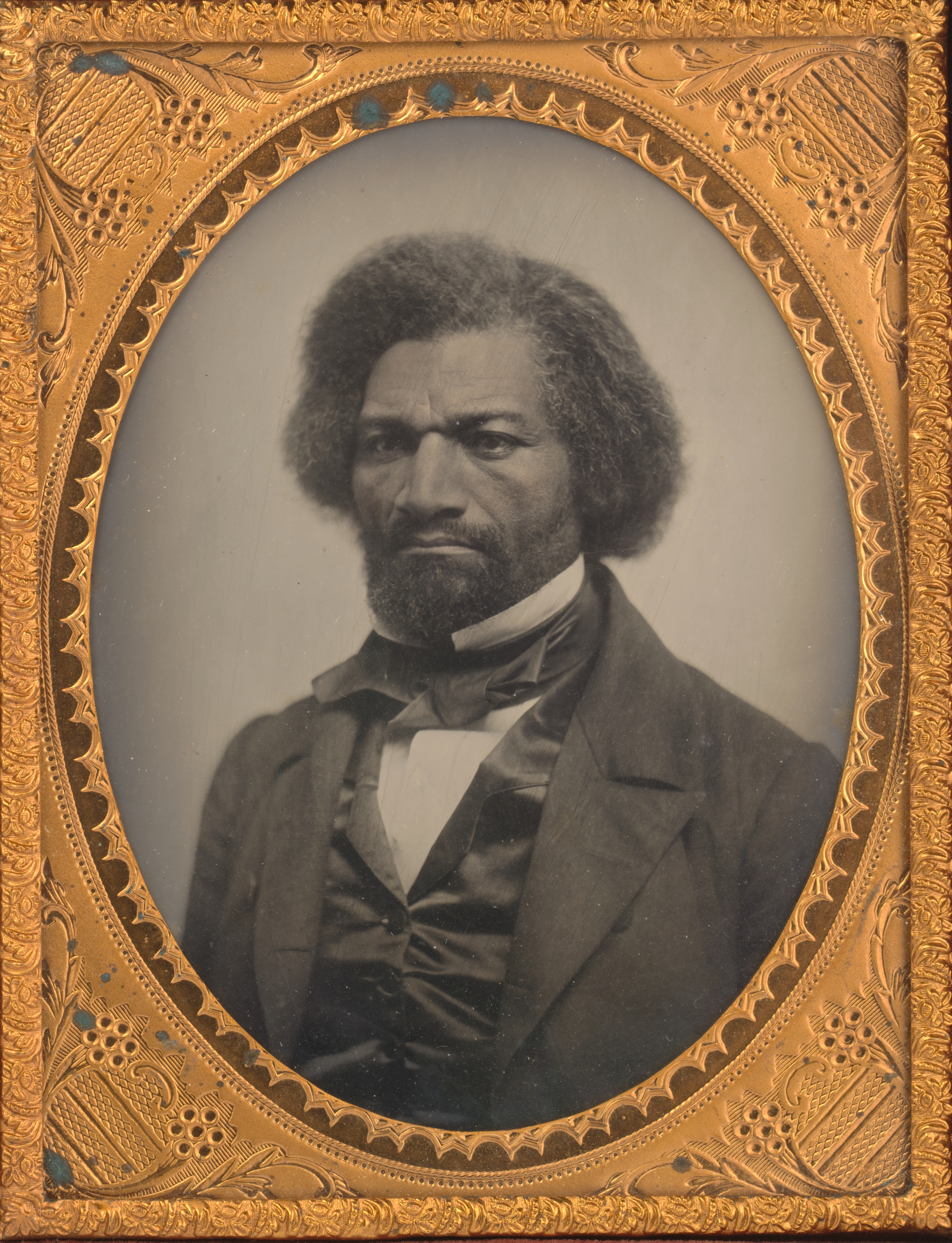
Smithsonian Open Access
Thursday, September 08, 2022

Thursday, April 28, 2022
Oregon Trail Mixup

I've posted again
AI artwork that's the same
A post repeat I much regret
Causing me to fume and fret
Thanks be to Jeff
Faithful reader
Who spots it when my effort's meagre
What can I do but
Add a poem
Edit title
Nourishing loam?
Woe is me
A repeat post
Overstaying its welcome
Unfriendly ghost
Thursday, November 19, 2020
A Passing Grade for Passchendaele

Paul Gross’ Passchendaele (2008) starts off strong with a gripping, evocative, and even artful small-scale battle in the muck and rubble of a ruined small town. I had high hopes for the film based on this sequence, but once Gross’ character winds up back on the home front in Calgary, the artistry and power of that opening is replaced by a not terribly compelling story of young love and PTSD that feels like a TV movie of the week. The film does pick up a bit when the story moves back to the battlefield, but even then the filmmakers fail to show why Passchendaele was such a milestone moment in Canadian history. Instead, we get an obvious and awkward homage of Christ’s carrying the cross to his doom, for no particular reason that I can see.
It’s not that the film isn’t competently made; the performances are solid, and the melodrama is fine, if not ambitious. But it’s too bad that Gross couldn’t sustain the excellence of the opening sequence throughout the rest of the film.
Friday, June 12, 2020
The Past, Reconstructed
I'm fascinated by footage from the dawn of filmmaking, but much of what remains of those early 19th-century movies is either lost to time or badly degraded. But hard work and new technology has already transformed a handful of short films from visions through a glass darkly to glimpses as sharp as looking as a window to the past itself--or close to that, anyway.
I'm currently aware of two YouTube creators who are sharing their amazing work: Denis Shirayev and Restored Footage. Each has posted only a handful of clips (my favourite may be Restored Footage's reconstruction of the Hindenburg newsreel) but each is amazing in its own right, at least to my eyes. If you're a fan of history or technology, their channels are worth exploring.
(I'd post a video, but Google has willfully made it harder to embed them on Blogger.)
I'm currently aware of two YouTube creators who are sharing their amazing work: Denis Shirayev and Restored Footage. Each has posted only a handful of clips (my favourite may be Restored Footage's reconstruction of the Hindenburg newsreel) but each is amazing in its own right, at least to my eyes. If you're a fan of history or technology, their channels are worth exploring.
(I'd post a video, but Google has willfully made it harder to embed them on Blogger.)
Friday, August 09, 2019
Earl of Green Gables, Day Eight: The Citadel and Arrival in Fredericton


Thursday, July 26, 2018
Poem for Half an Empire
The Byzantines were Romans, tooRoman Legions, tried and trueThey didn't ask what happened toThem when they met their WaterlooThe Rubicon they crossed through timeWas not their folly or their crimeWhen their Empire broke in twainThere were no songs of sad refrain;Except perhaps they were frustratedTo be confused with "complicated."
Sunday, January 22, 2017
100 Years of Cinema
What I love most about the Internet is the way it makes it possible for independent creators to easily share their work with a worldwide audience. Of course, without traditional marketing, a lot of that content, no matter how excellent, goes unnoticed.
That's why I'm writing about One Hundred Years of Cinema, a YouTube channel featuring short videos of cinema innovations and history - one per year, starting in 1915. So far, the creator is up to 1929, so it may be some time before we get to see the conclusion, but it's a fun ride nonetheless.
If you're interested in cinema history, give one or two of the videos a try. I've embedded one of my favourites below.
That's why I'm writing about One Hundred Years of Cinema, a YouTube channel featuring short videos of cinema innovations and history - one per year, starting in 1915. So far, the creator is up to 1929, so it may be some time before we get to see the conclusion, but it's a fun ride nonetheless.
If you're interested in cinema history, give one or two of the videos a try. I've embedded one of my favourites below.
Friday, October 28, 2016
Civ Weekend
Although my copy of Civilization VI appeared midweek and I did play for a couple of furtive hours on Tuesday night, I'm devoting this weekend to exploring the highly anticipated game in full as soon as I finish posting here tonight. It astounds me that I played the first Civilization on my Atari 520 ST back in 1992, when Ron and Allan and I were living in the Bleak House of Blahs. I wonder if I'll be around to play Civilization XII in about 50 years...well, not if I sit on my butt all the time playing Civilization, I suppose!
Thursday, November 19, 2015
Always and Never Coming Home

Against this backdrop, Alex Benedict and his pilot Chase Kolpath search for artifacts of humanity's past, which they sell to private collectors. Their adventures typically involve chasing down particularly juicy pieces of history.
In Coming Home, the latest Benedict novel, there's an artifact and a cruise liner trapped in warp space, awaiting rescue. But what's most interesting about this book is McDevitt's world-building. In greater detail than ever before, the author fills in the blanks of his future history, and in doing so reveals that his characters are woefully ignorant of most of it, for the sheer weight of years has erased much of our legacy.
The people of the future know of Armstrong and Aldrin and the first moon landing. But the site itself lasted only a thousand years before a Dark Age lasting centuries resulted in panicked historians bringing what they could back to Earth for safekeeping, only to have it lost in society's centuries-long collapse.
Here's one passage that hints at what's been lost:
Alex thinks the worst disaster in the history of the human race occurred when the internet shut down, apparently without warning, early in the Fourth Millennium. "The breadth of the loss," he said, as we went in through the museum's front doors, "is best illustrated by the fact that we don't even know what disappeared."
The vast majority of books, histories, classic novels, philosophical texts, were simply gone. Most of the world's poetry vanished. Glimpses of Shelley and Housman and Schneider survived only in ancient love letters or diaries. Their work doesn't exist anymore. Just like almost every novel written before the thirty-eighth century. We hear references to the humor of James Thurber, but we have nothing to demonstrate it. Unfortunately, there was no equivalent this time to the monasteries that salvaged so much during the first dark age. Within a few generations of the electronic collapse, a few people knew Pericles was important, but hardly anyone knew why. And Mark Twain was only a name.
...
The Albertson Museum, apparently, had locked down its reputation when it recovered a copy of The Merry Wives of Windsor. That had given us a total of six Shakespearean plays.
...
They had a theater where you could watch one of the movies from Hollywood's early years. Hollywood was where they manufactured most of the films when the technology was just getting started. Only seven have survived from that era...If anyone's curious, they are High Noon, South Pacific, Beaches, Close Encounters of the Third Kind, Casablanca, Gentlemen Prefer Blondes, and Abbott and Costello Meet Frankenstein.
...
Tarzan swung through jungles in a series of books that, in their time, are supposed to have outsold everything except the Bible. The search to identify him - it's assumed he is a male - is still on.
...
Superman and Batman got their start, we think, during the twenty-fourth century. Except for a brief period during the Dark Age, they've never gone away.It's clear from context that there are whole cities and even nations that the future has forgotten, though Canada still exists in a sense; indeed, Winnipeg is Earth's capital, and it's described as a beautiful place. But most of the sports my friends follow are gone, except for soccer. In the future they think Dracula was a famous physician known for extracting blood. They know there's an asteroid in the solar system named Spock, but they have no idea what the word signifies.
(There's a clever reference to McDevitt's Priscilla Hutchins novels, his other major future history: at least one of those novels survives, and Chase Kolpath muses that she liked the main character. So in the Alex Benedict universe, the Priscilla Hutchins universe is fictional.)
As a lover of culture, I found the book pretty harrowing. What price Utopia? Apparently, most of our good works. And yet I can't deny that McDevitt's future seems all too plausible. Hang on to your paperbacks and photo prints.
Thursday, July 24, 2014
Appalling Apollo Art

Wednesday, July 09, 2014

Thursday, February 24, 2011
Breadalbane Pioneers


I'm not a religious person, but there's something special about Breadalbane church. Even though it's usually empty these days, you can feel the weight of history emanating from every stone and timber. I wonder what yesterday's pioneers would make of the 21st century. I like to think that at least they'd be pleased to be remembered.
Subscribe to:
Posts (Atom)